Uncategorized

Uncategorized

Babycare brand under fire after being accused of sexualizing marketing phrases

(TNND) — A popular babycare brand is facing backlash after photos shared on social media appeared to show the company using phrases for a marketing campaign that were deemed inappropriate. Images on what appear to be a now-deleted Instagram post read “This is the closest your husband’s gonna get to a threesome,” and packaging showed words such as “I get turned on quickly” and “How about a quickie.” Current team members were also identified as criticism intensified, including director of packaging Brian Byrd, vice president of marketing strategy Adam Gagliardo and package design production manager Aaron Camello. The team page on the website appeared to be disabled when The National News Desk tried to access it. Users also reported the company hiding negative comments from the brand’s accounts. Lila Rose, president and founder of the anti-abortion nonprofit Live Action, shared a resurfaced post, calling it “Unbelievably sick @fridababy sexualizing babies. Boycott!” Most recently, Fridababy shared a post on Instagram reading, “Boobs, everyone loves to see them.” Users criticized the brand in comments, with one writing, “Hey so why do you sexualize your products???” Fridababy was founded in 2014 by CEO Chelsea Hirschhorn, who said after discovering the Swedish nasal aspirator NoseFrida, she wanted to bring it to the U.S. market. Comment with Bubbles JOIN THE CONVERSATION (1) The company has not issued a public response. Source link

Uncategorized

Company news: Pinckney Hugo Group announces 6 recent promotions

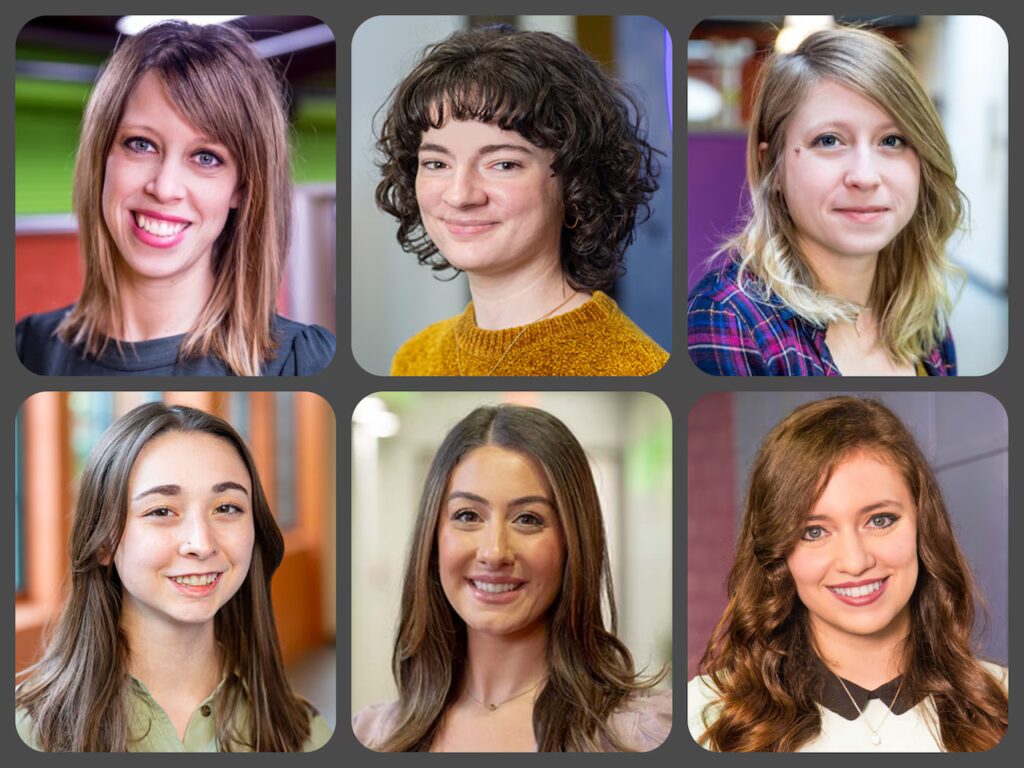
Business Published: Feb. 13, 2026, 12:17 p.m. Top left, clockwise: Abby Antczak, Megan Ruffalo, Katherine Titone, Sarah Togni, Olivia Trunfio and Olivia Wattsprovided photos Pinckney Hugo Group, a marketing communications firm, recently announced the promotion of six team members across various departments. >> Send us your company’s news about People in Motion Abby Antczak, of Clay, was promoted to account director. Antczak was previously a senior account manager and has been with the agency for more than 10 years. She has a bachelor’s degree in communication studies with a concentration in public relations and advertising from the State University of New York at Cortland. Megan Ruffalo, of Camillus, was promoted to art director. Ruffalo was previously a junior art director and has been with the agency for more than two years. She has a bachelor of fine arts degree in visual communication design from Nazareth University. Katherine Titone, of Mattydale, was promoted to senior UX designer. Titone was previously a UX designer and has been with the agency for more than 11 years. She has a bachelor’s degree in communications design from the Pratt Institute in Brooklyn. Sarah Togni, of Syracuse, was promoted to senior art director. Togni was previously an art director and has been with the agency for more than seven years. She has a master’s degree in advertising from the S.I. Newhouse School of Public Communications at Syracuse University and a bachelor’s degree in communications from Le Moyne College. Olivia Trunfio, of Syracuse, was promoted to social media manager. Trunfio was previously a social content and influencer marketing specialist and has been with the agency for more than three years. She has a bachelor’s degree in communication from State University of New York at Geneseo. Olivia Watts, of Syracuse, was promoted to motion graphics designer. Watts was previously a junior motion graphics designer and has been with the agency for over two years. She has a bachelor of fine arts degree in film and animation from Rochester Institute of Technology. *** If you’d like to submit an item about People in Motion at your organization, send a press release including photo, to business@syracuse.com with Company News in the subject field. We publish news about people with ties to Onondaga, Cayuga, Madison and Oswego counties. See all recent Company News items. Source link

Uncategorized

Popular babycare brand faces backlash over inappropriate marketing campaign

Fridababy faces criticism after old ads and packaging with suggestive captions resurface online Fridababy is facing significant online backlash after social media users circulated screenshots of its past Instagram captions, advertising campaigns and product packaging featuring suggestive language. The controversy began on TikTok before spreading to X and other platforms, where users criticised the babycare brand for using phrases they deemed inappropriate. Images shared online show packaging with wording such as “I get turned on quickly” and “How about a quickie.” Archived Instagram captions from 2020 and 2021 reportedly included terms such as “threesome” and “lube”. As criticism intensified, some users identified current team members listed on the company’s website, including director of packaging Brian Byrd, vice-president of marketing strategy Adam Gagliardo and package design production manager Aaron Camello. Hours later, the team page was reportedly removed from the site. Users have also alleged that negative comments are being deleted from the brand’s Instagram account. Fridababy was founded in 2014 by chief executive Chelsea Hirschhorn, who has said her experiences with postpartum recovery and early motherhood inspired the business. After discovering the Swedish nasal aspirator NoseFrida in 2013, she identified a gap in the US market and began developing and licensing products tailored to American consumers. Online opinion remains divided. Some users questioned whether the resurfaced content had been altered or generated for engagement.  Another user said they verified product images online and confirmed the packaging wording. Fridababy has not issued a public response. Source link

Uncategorized

Google Reinvents Ads, Drives Search Agentic 02/12/2026

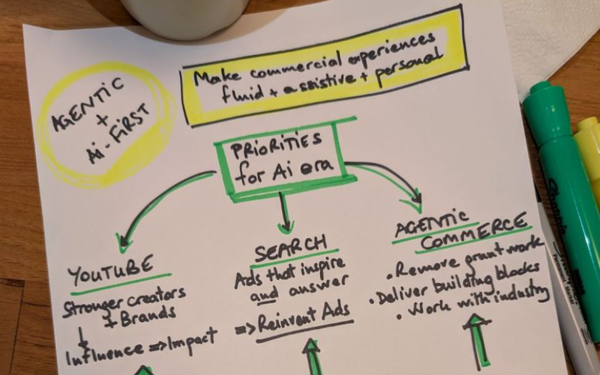
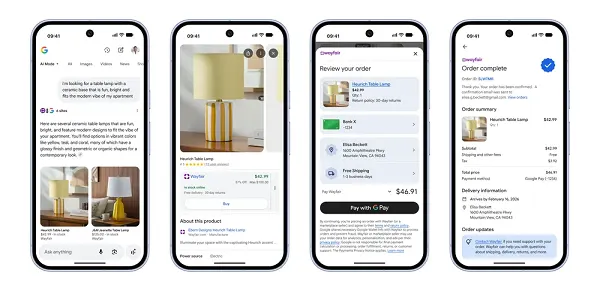
Vidhya Srinivasan, vice president and general manager of ads & commerce at Google, put search and agentic commerce at the top of the company’s list for changes in 2026, as Anthropic and OpenAI attempt to balance revenue gains against credibility and safety. In her third annual letter, Srinivasan outlines core strategies such as how artificial intelligence (AI) will change shopping and disjointed shopping journeys, as well as advertising and how to address the change in 2026. “We aren’t just bringing ads to AI experiences in Search; we are reinventing what an ad is,” Srinivasan wrote in a blog post. The shift is turning Search into a tool where ads inspire and answer questions simultaneously. For example, AI Mode offers businesses opportunities to fit into conversations. Google has spent the past few years testing new advertising formats to make this happen. Tests show it surfaces organic shopping recommendations based on what is most relevant to a query. advertisement advertisement Now, Google has been testing a new advertising format to showcase retailers that offer those products, clearly marked as sponsored. The new format helps shoppers easily find buying options, and offers retailers the opportunity to show up in these key moments of consideration. Similar formats are being tested in categories beyond retail such as travel, to help people find relevant products and services. Aside from removing repetitive tasks and slow processes for marketers, Google will work with the industry to build the “blocks” needed to make agentic commerce seamless and secure. UCP standardizes the ways businesses connect with AI agents across the entire shopping journey, including critical steps that enable secure digital identity and payments. In the weeks following the launch, citing companies it works with, Google said the protocols improve shopping experiences.  UCP-powered checkout is rolling out now in the U.S., enabling shoppers to buy items from Etsy and Wayfair in AI Mode in Search and the Gemini app, soon followed  by Shopify, Target, and Walmart. Influence will have an impact on YouTube, meaning as the shift from using Google’s video platform by creators for brand awareness to using them in commerce model where AI agents handle the entire transaction, from discovery to checkout. This year the goal to build stronger connections between brands and creators, and use AI to better understand content and audiences to instantly match brands with creator communities. This turns creators’ organic influence into real business impact. Since search is no longer limited to keywords, people are brainstorming, snapping photos and asking questions when looking for products and services.   Source link

Uncategorized

How social discovery shapes AI search visibility in beauty

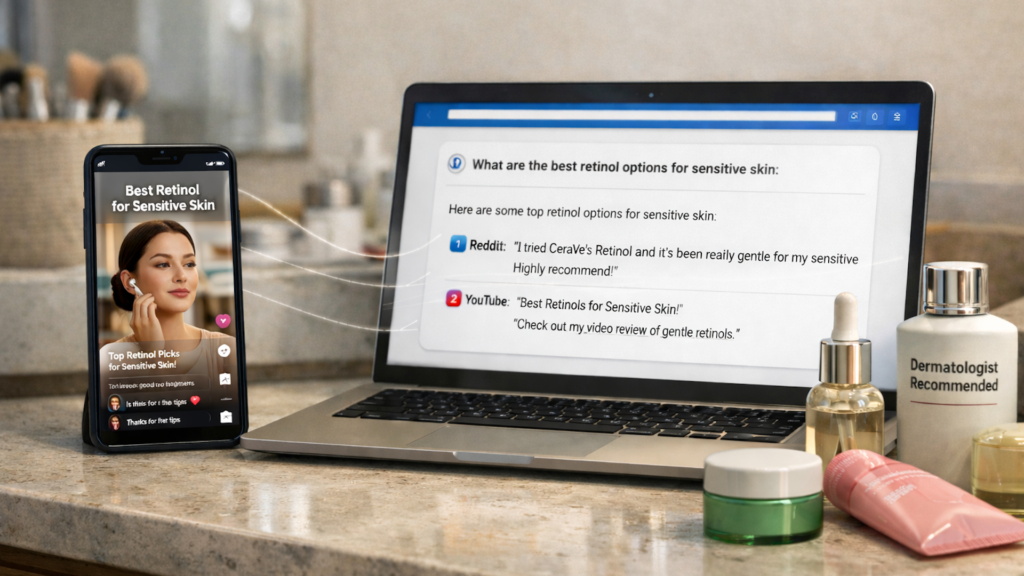
AI search visibility in beauty is increasingly shaped before a prompt is ever entered. Brands that appear in generative answers are often those already discussed, validated, and reinforced across social platforms. By the time a user turns to AI search, much of the groundwork has been laid. Using the beauty category as a lens, this article examines how social discovery influences brand visibility – and why AI search ultimately reflects those signals. Discovery didn’t move to AI – it fragmented Brand discovery has fragmented across platforms. AI tools influence mid-funnel consideration, but much discovery happens before a user enters a prompt. The signals that determine AI visibility are formed upstream. By the time a user reaches generative search, preferences and perceptions may already be set. If brands wait until AI search to influence demand, the window to shape consideration has narrowed. That upstream influence is increasingly social. Roughly two-thirds of U.S. consumers now use social platforms as search engines, per eMarketer research.  This shift extends beyond Gen Z and reflects how people validate information and discover brands. These same platforms consistently appear among the top citation sources in AI results. The dynamic is especially visible in the beauty category. In a study our agency conducted with a beauty brand partner, we found that Reddit, YouTube, and Facebook ranked among the top cited domains in both AI Overviews and ChatGPT. While Reddit is often viewed as an anti-brand environment, YouTube appears nearly as frequently in citation data, making it a logical and underutilized target for citation optimization. Dig deeper: Social and UGC: The trust engines powering search everywhere Your customers search everywhere. Make sure your brand shows up. The SEO toolkit you know, plus the AI visibility data you need. Start Free Trial Get started with The volume reality: Social behavior still outpaces AI It’s easy to focus on headline figures around AI usage, including the billions of prompts processed daily. But when measured against business outcomes such as traffic and transactions, the scale looks different. Social platforms are already embedded in mainstream search behavior. For many users, search-like activity on platforms such as TikTok and YouTube is habitual. Nearly 40% of TikTok users search the platform multiple times per day, and 73% search at least once daily. Referral data reinforces the contrast. ChatGPT referral traffic accounted for roughly 0.2% of total sessions in a 12-month analysis of 973 ecommerce sites, a University of Hamburg and Frankfurt School working paper found. In the same dataset, Google’s organic search traffic was approximately 200 times larger than organic LLM referrals. AI search is growing and strategically important. But in terms of repeat behavior, measurable sessions, and downstream transactions, social platforms and traditional search continue to operate at a substantially larger scale. The validation loop: Why AI needs social The most critical contrarian point for 2026 is that optimizing for social is also optimizing for AI. Large language models are not primary sources of truth. They function as mirrors, reflecting the consensus formed through human conversations in the data they are trained on. AI systems also demonstrate skepticism toward brand-owned properties. One study found that only 25% of sources cited in AI-generated answers were brand-managed websites. At the same time, AI engines prioritize third-party validation. Up to 6.4% of citation links in AI responses originated from Reddit, an analysis by OtterlyAI found. This outpaces many traditional publishers. There’s also a measurable relationship between sentiment and visibility. Research shows a moderate positive correlation between positive brand sentiment on social media and visibility in AI search results. Dig deeper: The social-to-search halo effect: Why social content drives branded search Get the newsletter search marketers rely on. Video and expert authority shape AI visibility Treating video as a “brand channel” or a social-first effort rather than a search surface is a strategic failure. On platforms such as TikTok and YouTube, ranking signals are shaped by spoken language, on-screen text, and captions – signals AI crawlers increasingly use to “triangulate trust.” In the beauty category, for example, ChatGPT accounts for about 4.3% of searches, while Google processes roughly 14 billion searches per day. However, for “how-to” and technique-based queries, consumers favor the detailed, personalized guidance of social-first video content. At the same time, the beauty sector has fractured into two universes, according to Yotpo’s GEO for Beauty Brands analysis. Science-backed brands such as Paula’s Choice and CeraVe dominate AI-generated results because they publish deep, structured educational content. Meanwhile, more traditional marketing-led brands are significantly less visible. The phrase “dermatologist recommended” correlates with high visibility in AI results because large language models treat expert social proof as a primary ranking signal, according to the same report. Breaking the high-production barrier: Creating content at scale One of the biggest hurdles brands cite is budget. Many believe they need a Hollywood production crew to compete in video environments. That is a legacy mindset.  In today’s environment, high-gloss production can be a deterrent. The current landscape rewards authenticity over polish. Consumers are looking for real people with real skin concerns, not highly filtered commercials. Optimizing for video discovery doesn’t require filmmaking expertise. Brands can leverage internal talent without adding headcount. Partner with creator platforms: Platforms such as Billow or Social Native allow brands to work with creators for as little as $500 per video. When mapped to a high-intent query, that investment can drive measurable search visibility outcomes. Leverage social natives on staff: Often, the strongest asset is internal. Identify team members who are active on platforms such as TikTok and understand platform dynamics. Creating internal incentives or challenges to produce content can generate a steady stream of authentic assets while contributing to culture. Make strategy the differentiator: A large following is not a prerequisite for visibility. In one case, a TikTok profile built from scratch with one part-time creator at $2,500 per month generated hundreds of thousands of views within 90 days. The focus was not on viral trends, but on meaningful transactional terms that drive revenue. If a new

Uncategorized

Why marketing leaders are ditching polished headshots for AI caricatures

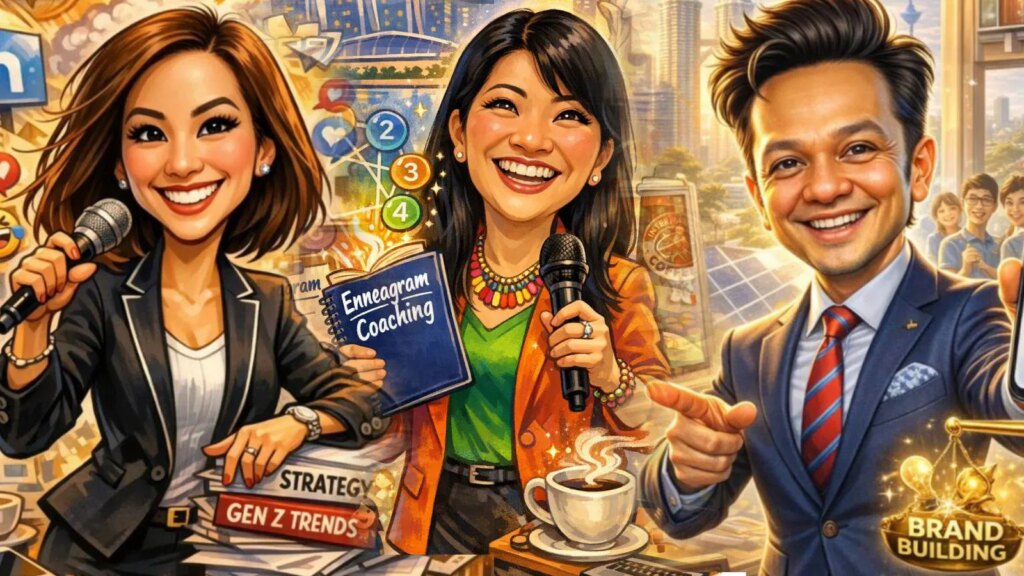
Artificial intelligence (AI) has rapidly become a staple in marketers’ toolkits, making it easier to generate images, copy, and content at the click of a button. According to CleverTap AI, 81% of marketers say their organisations use GPT models such as OpenAI’s ChatGPT or Google’s AI Gemini, and 71.4% report extensive use by content teams. But AI isn’t just about efficiency. It’s also fueling playful, creative trends. From the “Ghibli trend“, which transformed cherished memories into the animation studio’s iconic style, to AI doll portraits with tiny laptops and coffees, the technology is bringing joy and personality into everyday work life. Now, the Caricature trend is in the spotlight. Marketing leaders tell MARKETING-INTERACTIVE that caricatures are a playful, exaggerated lens that shows personality, career journeys, and inner motivations in ways traditional headshots cannot. Beyond competence, caricatures capture energy, chaos, humour, and the balancing acts of marketing. In addition, audiences tired of corporate polish are responding to this mix of individuality, authenticity, and visual fun. In all, marketers see it as part of a broader shift: generative AI is making creative self-expression more accessible, interactive, and culturally relevant, helping professionals stand out in a crowded digital world. Don’t miss: How IKEA is making trendjacking part of its personality Abdul Sani Abdul Murad, group chief marketing officer, RHB banking group  A professional headshot says, “I am competent. I own a suit. I understand lighting.” A caricature says, “My head is disproportionately large because I overthink things for a living.” The caricature captures something a headshot never can: the absurdity of the job. The balancing act between brand and performance, and the faintly delusional belief that creativity can move markets. Marketing has always been a tension. Long term brand versus short term sales. Creativity versus commerciality. Courage versus caution. If you are too far to one side, you wobble. Too far to the other, you stall. My career has largely been about defending the irrational in rooms that prefer spreadsheets, and defending spreadsheets in rooms that prefer applause. Caricatures are resonating because we are exhausted by polish. They reintroduce personality and signal individuality. If professionals are choosing exaggeration over perfection, perhaps it is because exaggeration feels more honest. Exaggeration is simply truth with the volume turned up. Alex Chan, head of brand, communications and marketing, Geneco  While a headshot helps people associate a face with a name, the caricature trend goes further by visually capturing the essence of a person’s career journey. For my generation, I was pleasantly surprised by how ChatGPT summarised my profession so accurately, especially when it highlighted the core of my career with the quote, “Let’s drive brand equity!” This put my experience into clear perspective. LinkedIn rarely sees social media trends, and it is even more unusual to see one that stands out from the platform’s typically polished profiles. Beyond being a fun way to use AI, the trend allows professionals to showcase individuality and authenticity in a more relatable, memorable, and even amusing way. Adora Sarah Chou, chief marketing officer, Guzman y Gomez Singapore  A professional headshot captures position and credibility and shows what I look like. This caricature captures character and energy and shows how I operate. It conveys movement between strategy and storytelling, boardroom decisions and brand moments. As marketers, we don’t just sit behind campaigns; we build them, obsess over them, and in my case, even voice the commercials on national radio. What this AI caricature captures that photography doesn’t is joy. I genuinely love what I do, and when you enjoy the craft, the line between work and play beautifully blurs. Modern leadership isn’t one-dimensional. We’re strategists, creators, operators, and communicators often all in the same hour. The caricature reveals that layered reality. The headphones and “ON AIR” sign show my love for storytelling. The strategy deck shows discipline. The burrito signals proximity to product. It blends professionalism with personality. Illustrated identities reflect dimensional leadership, experimentation, and the chance to express how you think and operate, standing out in a digital world. Koo Sok Hoon, director of marketing, Shangri-La Singapore  The caricature captures the narrative of my career, its milestones, evolution, and personality; in a way a professional headshot simply can’t. While a headshot presents how you look, the caricature conveys where you’ve been, what you’ve built, and the story behind the role. The focus on advertising effectiveness and ROI felt especially true to my career, as those principles have shaped much of my work. The inclusion of brands such as BMW, GUCCI, Breitling, and Shangri-La Singapore also accurately reflects the diversity and scale of my professional journey. Caricatures and illustrated identities tap into several compelling dynamics right now. First, there’s the powerful FOMO effect, people naturally want to participate in trends that feel timely and culturally relevant. Second, there’s a sense of delight and curiosity in seeing how accurate platforms such as ChatGPT can synthesise and reflect one’s persona using publicly available information. Finally, the animated, illustrated format adds an element of charm and approachability, making self-expression feel both playful and visually engaging. Eugene Lee, vice president, chief marketing officer, APAC, CHAGEE I think caricatures are so fun because they capture the essence of a person — not just how you look, but also your inner world — and bring both to life in a playful way. What I loved most about mine was the sparkle in my eyes and the width of my smile. It really reflects how the past year at CHAGEE has been for me. I’ve genuinely enjoyed the journey, felt energised by the work, and can clearly see where I’ve added value and pushed things forward. Compared to a formal headshot, it feels more human, more honest, and more “me”, showing both the joy and purpose behind what I do. Peilin Lee, head of marketing, Nespresso Singapore A headshot is safe. A caricature is honest. This trend went viral quickly as people can share (and boast) about their diverse interests from the safety of an adorable
Uncategorized

I want to see my new business take off. One person is holding me back.

Good Job is Slate’s advice column on work. Have a workplace problem big or small? Send it to Laura Helmuth and Doree Shafrir here. (It’s anonymous!) Dear Good Job, A colleague and I launched a new company after our previous employer closed. We divided responsibilities so she handled manufacturing and distribution while I managed digital content and marketing. My side of the business grew steadily. But within six months, her operational area began to falter. I began to step in to keep physical projects moving, and key infrastructure on her side wasn’t maintained. Despite having access to shared digital project management tools, she frequently framed it as a communication problem. I attempted weekly check‑ins, but they rarely happened consistently and often devolved into venting rather than planning. Because our roles are so separate, meetings lack purpose beyond basic updates. Late last year, she asked to take over digital content management, leaving me with only marketing. Although I initially resisted—since I’d be giving up tasks I enjoy and that part of the business was functioning well—I eventually agreed. Since then, digital projects have slowed dramatically, leaving me with little marketing work. I’ve adapted repeatedly to her needs and tried to improve communication, yet she still feels overshadowed and left behind. I enjoy the job I do for the clients, but I don’t have the bandwidth for hand-holding or supervising her side of things as well. I ultimately want to see this company grow and do well, and that requires both halves to work better. Is there a new way of approaching this that will get us back on track? —Carrying the Ball Dear Carrying the Ball, Congratulations on starting a new company, which must be exhilarating but stressful for both you and your co-founder. Do you have a sense of why your colleague is falling behind? Is it a lack of knowledge, distraction, failure to follow through, or lax work habits? Some of these problems are more fixable than others, and figuring out where she’s getting snagged might help you prioritize whatever fixes you suggest. Your co-founder sounds pretty defensive in meetings, but the first step is another conversation. Ask her to meet with you to review the company’s performance so far and strategize about the coming year. Set up a shared document with an agenda so you can both prepare for the meeting. First, talk about what has gone well (including her successes) and then turn to how you could grow or improve the business. If you have data, ideally in graphic form, show her the slowdown in digital projects you’ve observed. Present it not as a “gotcha” document, but as a problem to solve together. Do the same for other parts of the business that are lagging. Ask her how she thinks you, together, can improve performance. Brainstorm about ways to fix it. It’s slower to brainstorm than to just jump in and fix something, but it gives her a chance to contribute and to recognize when something needs to change. If she starts venting, give her a minute and then ask to move to the next item on the agenda. You won’t solve everything with a Big Picture meeting, but the process should remind her of the stakes and goals of your company. In the strategy meeting or a follow-up, you could suggest revisiting your roles again to make sure you’re dividing your labor efficiently. She set a precedent by asking to take over digital projects, so you can say that you’re still in the experimentation phase of the new company and would like to officially take on another division, or hire someone else to do so if you can swing it. If your co-founder rejects your ideas and doesn’t have good ones of her own, try to find the funds to bring in a consultant. Look for one who specializes in your line of business and has some experience in relationship mediation. The consultant has probably seen plenty of stalemates like this before. They can suggest ways to professionalize the business that might not be obvious to two new founders. Plus, your co-founder might pay more attention to an outside expert’s analysis of how to run the company. If the problems worsen, talk to a lawyer about what it would take to buy out your colleague or replace her with a different partner. Please keep questions short (<150 words), and don‘t submit the same question to multiple columns. We are unable to edit or remove questions after publication. Use pseudonyms to maintain anonymity. Your submission may be used in other Slate advice columns and may be edited for publication. Thanks! Your question has been submitted. Dear Good Job, I have really enjoyed my latchkey job supervising kids after school. But things are changing, and not for the better. Our school administration staff, who have never shown much interest in us, took over and are now telling us who’s going to do what, without assessing our strengths or doing performance reviews. It seems like we’re a collection of individuals now, not a team. Before, if someone forgot a task and someone else covered it, they’d say, “Oh, thank you!” Now it’s, “Don’t do my job for me.” Our supervisor no longer welcomes offers to help her with stuff on our downtime—she now says it’s “just someone else telling me I can’t do my job.” Clearly, she’s frustrated, too, and is lashing out. I wanted to stay here until retirement, but this isn’t the place I once loved. I know I won’t be happy here anymore if things don’t change back, but I’d feel guilty leaving my supervisor; she’s been good to me. Please help. —Sad and Frustrated Dear Sad and Frustrated, I’m sorry your once-friendly workplace has turned bitter and suspicious. The administration staff undermined your team by limiting your ability to make decisions about how to do your job. That’s a terrible thing to do for morale and even for workers’ mental and physical health. Long-term studies show

Uncategorized

how Israel’s innovators and creators are speaki

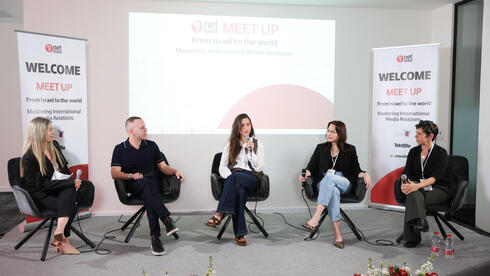
A first-of-its-kind conference was held Wednesday at the ynet offices in Rishon Lezion titled, “From Israel to the World – How to Communicate the Israeli Story on the International Stage.” The event, organized in collaboration with Taboola, monday.com and Ifat Media, brought together media executives, tech leaders, public relations professionals and content creators to examine the challenges of communicating Israel’s story globally. Hosted by ynet studio anchors Sharon Kidon and Alexandra Lukash, the conference featured keynote addresses from Sharon Shalmon Esman, CEO of ynet Global, and editor-in-chief Karen Shemesh, who offered a behind-the-scenes look at operating in the international media arena. Panels addressed public diplomacy, foreign media relations, message management, artificial intelligence tools and the broader challenge of telling an authentic Israeli story in a digital world. 6 View gallery A panel focused on the tech and marketing perspective, moderated by Alexandra Lukash (Photo: Oz Moalem) 6 View gallery A panel on influencers and young audiences, moderated by Maayan Sarig (Photo: Oz Moalem) 6 View gallery ynet studio anchor Sharon Kidon (Photo: Oz Moalem) The panel moderated by Lukash examined the issue from a technological and marketing perspective. Participants included Asaf Azulay, partner and chief marketing officer at Team8; Hilla Bakshi, founder of the HaMeetupistiot community for women in high tech; Dana Raz, acquisition and venture capital lead at TikTok Israel; and Dana Zax, a marketing consultant for international brands. “Israel and innovation are almost synonymous,” Lukash said. “But how do you translate that innovation — that Startup Nation mentality — from ‘Israeli,’ which isn’t even Hebrew but a language of its own, to a global audience?” 6 View gallery ynet studio anchor Alexandra Lukash (Photo: Oz Moalem) Azulay described a moment of upheaval in venture capital and marketing. “We’re in a period of almost perfect chaos,” he said. “We talk about AI constantly, but we don’t fully grasp how dramatically it’s transforming marketing and investment.” He noted that capital is increasingly concentrated in a smaller number of companies. “Investors are looking for the very best founders and the strongest funds. It’s harder to raise money today if you’re not truly innovative.” At Team8, artificial intelligence is integrated into the company-building process from the outset. “We’re using AI to predict how future customers — chief security officers, enterprise decision-makers — will think. It’s part of how we build companies from day one,” he said. But technology alone is not enough. “At the end of the day, you’re building a story, not just a company.” Raz pointed to a fundamental shift in consumer behavior, accelerated by platforms such as TikTok. “Before, companies started with the product and only then thought about the audience,” she said. “Today, you have to understand your audience first.” She encouraged founders to view social platforms as real-time focus groups. “There’s authentic conversation happening from the bottom up. Companies once paid huge sums for research to understand what people were thinking. Now that dialogue is right in front of you.” Differentiation, however, has become more challenging. “Users immediately recognize inauthenticity,” she said. “They don’t want you to interrupt them. They want you to integrate into their experience — to offer real value before asking for anything in return.” In this environment, she added, attention has become more valuable than clicks — a reflection of what she described as a broader revolution in consumer behavior. Zax emphasized that Israeli brands now operate in a flattened, borderless media environment. “The world is flat,” she said. “Brands aren’t competing only with other brands anymore. They’re competing with every content creator.” Understanding platform language and cultural nuance is critical, she said. “You can’t just hire a native English speaker and assume it will work. You need someone who understands the cultural language of the platform.” She recounted working with the Jerusalem-based company Lightricks on a collaboration with influencer Charli D’Amelio. While the concept was strong, a small detail undermined its credibility. “The dollar sign was placed on the wrong side of the number,” she said. “For an American audience, that immediately signals that you don’t understand them.” The lesson: global storytelling must account for local detail. 6 View gallery Bakshi framed marketing as fundamentally human. “We’re not products. We’re people,” she said. She cited the recent $32 billion sale of Israeli cybersecurity company Wiz as an example of a story that resonated internationally not only because of its scale but because of the emotion it generated. “We’re still human. We’re not robots — at least not yet. You have to connect to emotion.” Trust, she said, is the foundation of any community. “I won’t promote anything in my community that I haven’t tried myself. If I push something I don’t fully stand behind, it simply won’t sell.” Communities provide a direct channel to consumers, she added — but only if credibility is preserved. The panel returned repeatedly to artificial intelligence. While Zax argued that “anyone who doesn’t know how to use AI properly in their work is falling behind,” she cautioned against overreliance and what she called “AI slop” — generic, personality-free content that erodes trust. “If your content, without a logo, doesn’t clearly reflect who you are, you don’t have a brand,” she said. Another central panel, moderated by Maayan Sarig, head of communications at Meta Israel, focused on influencers and young audiences. Participants included content creators Rudy Rochman, Or Elkayam and Moriya Ben Harush. The discussion examined how young people and teenagers consume news and the challenge of building trust with a generation that questions nearly every source of information. According to data presented during the conference, 94% of young people consume digital content daily, with visual platforms and short-form video dominating. 6 View gallery A panel on influencers, moderated by Maayan Sarig (Photo: Oz Moalem) Elkayam, who began creating content during the COVID-19 lockdowns, described how his audience has grown alongside him. “I was stuck at home with my mom, making videos for fun,” he said. “Suddenly people started recognizing me.” Over time, he said, followers have

Uncategorized

Google Shares Coming AI-Powered Ad Innovations

Listen to the article 3 min This audio is auto-generated. Please let us know if you have feedback. Google has previewed a range of coming ad innovations, powered by artificial intelligence, as it looks to evolve its ad options in line with discovery trends, and help marketers maximize the opportunities of improved systematic understanding of consumer preferences. In her annual letter, Google’s General Manager of Ads and Commerce Vidhya Srinivasan has shared some insight into Google’s planning, and where you can expect to see more innovation throughout this year. First off, Srinivasan shares details of Google’s latest ads in AI responses, with a new ad option that will showcase relevant products based on an AI answer. As this sequence shows, Google will soon provide a new ad placement that will highlight relevant product matches that align with its AI answers. Google says that the promotions will be clearly marked as “Sponsored,” so there’ll be no confusion about these being paid placements. But it could be a valuable way for brands to drive traffic based on AI answers. Google says that this is currently in testing, with plans to launch the AI answer ads later this year. Google’s also developing its Direct Offers option, which will enable businesses to offer promoted deals tailored to an AI response. That will more directly align promoted deals with AI answers, providing another way for marketers to tap into the rise of AI chatbot usage. Google’s also looking to expand its AI agent tools, which it believes will become a bigger consideration, as more consumers become accustomed to getting AI tools to undertake tasks for them. As explained by Google: “UCP standardizes how businesses connect with AI agents across the entire shopping journey, including the critical step of enabling secure digital identity and payments. It’s already improving shopping experiences on Google. In fact, UCP-powered checkout is rolling out now, letting US shoppers buy items from Etsy and Wayfair, right in AI Mode in Search and the Gemini app (with Shopify, Target, and Walmart coming soon).” That will streamline connection within AI chatbots, enabling people to make purchases without leaving a chat stream. Finally, Google’s also looking to improve its processes for connection brands with relevant creators for collaborative promotions. Google’s Open Call process, which is currently in testing in the U.S., enables brands to post requests for user-generated content (UGC) creative videos, in order to find relevant creators to partner with on promotions. And Google’s looking to expand this, by using (you guessed it) AI to better match brands with the creator communities that will be most open to their products. Some interesting updates, which could factor into your Google ads planning, and how you approach AI search, in particular, as more people get more info from AI answers. And if these work on Google, you can expect other AI platforms to integrate similar, as they all look to make more money to supplement the huge costs of running AI infrastructure. Source link

Uncategorized

Israeli startups invest $50 million in ‘Waze of marketing’

Two Israeli-based startups announced on Wednesday investment rounds that raised almost $50 million to develop Artificial Intelligence platforms focused on business-to-business (B2B) models, especially in sales and marketing. Brandlight, a platform developed to analyse AI-generated advertising, announced a $30M in Series A funding led by Pelion Venture Partners, Cardumen Capital, and G20 Ventures. The company has worked with over 100 global brands, including Fortune 500 brands such as Kimberly-Clark and Estée Lauder, to “guide their decision making in the world of AI-driven discovery and media.” Brandlight serves as the navigator that analyses AI-generated media and translates it into clear, actionable recommendations for marketing, PR, content, and media teams, the company explained. “We’re hiring aggressively across Israel and New York,” said Imri Marcus, CEO and Co-Founder of Brandlight. “We’re bringing in dozens of people across product, engineering, data, and go-to-market to meet the pace of demand from global brands.” Brandlight team. (credit: NADAV MARGALIT) AI platform to improve ‘science of selling’ Tel Aviv-based Artificial Intelligence start-up WINN.AI announced on Wednesday a $18 million Series A funding round led by three global software investors, bringing its total investment to over $21 million, including seed capital. The company is focused on developing an AI agent that works alongside sales teams to ensure that workers follow “the latest playbooks and best practices during customer conversations.” It raised investments from Insight Partners, Mangusta Capital, and S Capital, with participation from Moneta, Highsage, Alumni Ventures, Sarona Ventures, and OurCrowd. According to its internal report, the company tripled its annual recurring revenue in 2025 and grew 30 times over the last two years. “We invested in WINN.AI because we see its real-time AI assistant fundamentally reshaping how sales gets done,” said Kevin Jiang, Managing Partner & GP at Mangusta Capital, and added, “We believe this type of AI co-pilot will empower revenue teams in real-time to sell more effectively and consistently in the future.” AI working as a personal sales assistant Eldad Postan-Koren, CEO and Co-Founder of WINN.AI, explained that the AI they developed handles the “science behind sales,” while sales representatives focus on connecting with clients. WINN.AI’s team. (credit: Shai Hansav) “Our customers see the quality of conversations rise immediately: the AI ensures consistency, and the human ensures trust,” he said. Among the company’s clients are Deel, a global HR-tech company; Cyera, a data security unicorn; and Kaseya, a Miami-based IT management powerhouse. The company explained that this new investment will fund its market expansion into the United States while it continues to develop its products. Source link

Scroll to Top
0

Subtotal