
Uncategorized

Uncategorized

AMD Names Ariel Kelman CMO As AI Growth Story Meets Rich Valuation

Get insights on thousands of stocks from the global community of over 7 million individual investors at Simply Wall St. Advanced Micro Devices (NasdaqGS:AMD) has appointed Ariel Kelman as Chief Marketing Officer. Kelman previously held senior marketing roles at Salesforce, Amazon Web Services, and Oracle. The appointment is intended to support AMD’s push in AI, data center, and gaming markets. For investors tracking NasdaqGS:AMD, the CMO appointment comes with the shares at $213.58 and a 1 year return of 91.2%. The stock has also recorded a 3 year return of 150.7% and a 5 year return of 137.5%. Kelman is stepping in as AMD is expanding its product footprint in AI and data center offerings, markets where clear messaging and differentiated positioning can be important. For you as a shareholder or prospective investor, a key consideration is how effectively this leadership change can help AMD communicate its roadmap and compete for enterprise and cloud workloads. Stay updated on the most important news stories for Advanced Micro Devices by adding it to your watchlist or portfolio. Alternatively, explore our Community to discover new perspectives on Advanced Micro Devices. NasdaqGS:AMD 1-Year Stock Price Chart Does the team leading Advanced Micro Devices have what it takes? See our full breakdown of the management team’s track record and compensation. ⚖️ Price vs Analyst Target: At US$213.58 versus a US$288.50 consensus target, the shares sit about 26% below the average analyst view. ✅ Simply Wall St Valuation: Simply Wall St currently assesses AMD as trading around 39.1% below its estimated fair value. ✅ Recent Momentum: The 30 day return of 2.8% shows modest positive momentum into this marketing leadership change. There is only one way to know the right time to buy, sell or hold Advanced Micro Devices. Head to the Simply Wall St company report for the latest analysis of Advanced Micro Devices’s Fair Value.. 📊 Ariel Kelman’s CMO appointment is directly linked to AMD’s push in AI and data center, so it may be useful to watch how clearly the company outlines product positioning and customer wins in these areas. 📊 With a P/E of 81.6 versus a Semiconductor industry average of 46.4, execution on the AI and data center story will matter for justifying this higher earnings multiple. ⚠️ One flagged risk is significant insider selling over the past 3 months, which you may want to weigh against the 4 identified rewards tied to value and growth. For the full picture including more risks and rewards, check out the complete Advanced Micro Devices analysis. Alternatively, you can check out the community page for Advanced Micro Devices to see how other investors believe this latest news will impact the company’s narrative. This article by Simply Wall St is general in nature. We provide commentary based on historical data and analyst forecasts only using an unbiased methodology and our articles are not intended to be financial advice. It does not constitute a recommendation to buy or sell any stock, and does not take account of your objectives, or your financial situation. We aim to bring you long-term focused analysis driven by fundamental data. Note that our analysis may not factor in the latest price-sensitive company announcements or qualitative material. Simply Wall St has no position in any stocks mentioned. Companies discussed in this article include AMD. Have feedback on this article? Concerned about the content? Get in touch with us directly. Alternatively, email editorial-team@simplywallst.com Source link


Uncategorized

What 4 AI search experiments reveal about attribution and buying decisions

AI search influence didn’t show up in our SEO reports or AI prompt tracking tools. It showed up in sales calls. “Found you via Grok, actually,” a new lead said. That comment stopped us cold. We hadn’t tried to rank in Grok. We weren’t tracking it. Yet it was influencing how buyers discovered and evaluated us. That disconnect kept appearing in client conversations, too. Everyone was curious about AI search, but no one trusted the data.  Teams wanted visibility in ChatGPT and other AI tools, then asked the same question: “Why invest in a channel that doesn’t show up cleanly in attribution?”To answer that, we ran controlled experiments using assets we could fully control – an agency website, personal sites, an ecommerce brand, and purpose-built test domains. The goal wasn’t to win AI rankings. It was to understand what still matters once AI enters the decision process: Does AI search change what people buy, or just where brands appear? Can something influence revenue without ever appearing in analytics? Does AI recommendation affect performance across other channels? Why we ran the experiments Most AI search conversations fixate on visibility signals like brand mentions, citations, or visibility screenshots from AI prompt tracking tools. Search has always had one job: help people make a decision. We wanted to know if AI search performed the same job and actually changed commercial outcomes. AI systems now operate at the stage where buyers compare options, shortlist providers, and reduce risk. If AI mattered, it had to show up at the moment of decision. On measurement limits:  We didn’t rely on API data because API responses often differ from what real users see. Instead, we observed live interfaces across ChatGPT, Perplexity, Gemini, and Google AI Overviews.  We used prompt tracking to spot patterns, not to declare absolute wins. Your customers search everywhere. Make sure your brand shows up. The SEO toolkit you know, plus the AI visibility data you need. Start Free Trial Get started with A simple tactic became popular over the past year: Create a “best X” list on your site. Put yourself at the top. Let AI systems pick up the list. I’ve seen agencies do this locally and felt conflicted about it. It wasn’t spam. But it relied on a blind spot – LLMs struggle to separate independent rankings from self-written ones. Around the same time, Ahrefs published a large study that helped explain why this works. Glen Allsopp analyzed ChatGPT responses across hundreds of “best X”-style prompts and found that “best” list posts were the most commonly cited page type. Two things from the study stood out: Format: This included cases where brands ranked themselves first Freshness: Most cited lists had been updated recently I could have tested these observations on StudioHawk. Instead, I did it on my personal brand website to manage the risk.  I published a list of the “Best SEO agencies in Sydney” and included my own website among the entries to test whether AI would “take the bait,” so to speak. Within two weeks, LawrenceHitches.com appeared across AI tools for “best SEO agency Sydney” style searches: The speed was surprising – traditional SEO rarely moves that fast. If visibility appears this easily, then visibility alone can’t mean much, so I tested it again. Initially, I could have been piggybacking off the already established StudioHawk brand, so I decided to run a self-promotion test on a fake website We used a basic landscaping site built only for SEO and AI testing and published the same type of page, a “best X” list. This time, the topic was “best landscapers in Melbourne”: Within two weeks, the list appeared in AI responses again. The result repeated almost exactly. If a brand-new test site can surface this fast, then “appeared in AI” doesn’t mean much on its own. Visibility vs. trust These two experiments showed one thing clearly: LLMs are still easy to influence at the surface level. I ran these tests back in August 2025, but the same pattern still appears today. A “best SEO agency Sydney” search run in January 2026 shows the same list-driven results: This creates a real conflict for brands. On one side, the data says yes – the Ahrefs research shows “Best X” pages attract citations. Large brands like Shopify, Slack, and HubSpot publish self-ranked lists without obvious damage to rankings or AI visibility. On the other side is buyer trust. As Wil Reynolds put it, listing yourself first on your own site doesn’t build confidence with buyers. That’s the tension. When bullish founders ask for the secret sauce to appear in ChatGPT, I’m blunt. List-based “best of X” pages that rank the author first have been a fast way to surface in some AI results. That doesn’t work everywhere, and it’s unlikely to hold up long term. Dig deeper: Google may be cracking down on self-promotional ‘best of’ listicles If a landscaping site with no reputation can surface this quickly, then appearing in AI means very little on its own. Why prompt tracking can’t be a success metric A lot of money is flowing into AI prompt tracking tools. Clients ask for them constantly. We use them too, but with a clear warning. I wouldn’t make major decisions based on screenshots or Reddit threads about where a brand appears in ChatGPT. Brand overlap between API outputs and real user sessions was as low as 24%, according to recent research from Surfer SEO comparing tracking APIs with scraped user experiences. That means three times out of four, what the API told you was happening wasn’t what the user was actually seeing. If a brand can appear in a screenshot but disappear in a real user session, then appearance alone isn’t a metric. We stopped asking if we showed up. Instead, we started asking, “Did this change how buyers behaved?” Did leads reference AI tools without prompting? Did sales calls skip education? Did the speed of buying change? Did price resistance soften? These signals were harder

Uncategorized

With AI backlash building, marketers reconsider their approach

If this year’s Super Bowl commercials made one thing clear, it’s that companies are still trying to sell Americans on AI. As public sentiment wanes, however, brands are recalibrating how they position themselves in the era of AI. There’s a mounting distrust, and the numbers prove it. While 82% of ad execs feel Gen Z and millennials feel positively about AI-generated ads, only 45% of those consumers actually feel that way, according to recent research from the IAB and Sonata Insights, a custom research and advisory service. That gap has only widened since the 2024 study. The growing trust deficit  Some brands are taking notice that technology now carries emotional weight, signaling messages about ethics, morals and trust. Even brands that aren’t offering AI services are careful about campaign language, brand voice and positioning around AI usage. Take, for example, He Gets Us, the Christian nonprofit organization that has become a Super Bowl regular. This year’s spot was intentionally shot on film and featured real people, according to Simon Armour, chief creative officer at Come Near, the creative team behind He Gets Us. “Even the use of film, and therefore not using AI, we want it to feel as human as possible,” Armour said. “We want the connection to feel real. Particularly in a very digital world, we want that warmth.” For Come Near and other brands, the approach has to be nuanced. Advertisers are convinced AI is a tool that promises faster and cheaper creative. Eliminating it, or even taking a strong stance against it, isn’t an option. Re-centering human agency It’s not even that AI-produced spots are guaranteed to flop. Only 21% of people say they’d like an ad campaign less if they found out it was AI-generated, according to VML Intelligence. Some AI-generated ads are now said to perform at the same level as human-made creative, according to a recent study from Taboola in collaboration with researchers at Columbia University, Harvard University, Technical University of Munich, and Carnegie Mellon University. AI ads had an average click-through rate of .76% in comparison to the .65% of human ads, according to the study. Even disclosing if AI was used in an ad is helpful, per the IAB’s reporting. About 73% of Gen Z and millennials say clear disclosure would either “increase or have no impact on their likelihood to purchase the product or service,” according to the report. Brands like Aerie and Dove have vowed to not use AI in ads. Meanwhile, brands like He Gets Us have taken a more subtle approach. There’s the He Gets Us Super Bowl spot shot on film, and Porsche’s hand drawn holiday campaign last year, produced by Parallel Studio, an animation team. Panda Express rolled out a human-made animated short celebrating Lunar New Year alongside Passion Pictures, an entertainment company specializing in animation and documentary work. Finding a nuanced approach Advertisers are using generative AI for everything from customer insights to content creation. Even if AI was not used to produce the final spot, it was likely used somewhere along the way. It raises questions as to whether a brand that postures itself as being anti-AI is actually, said Justin Booth-Clibborn, co-managing director and executive producer at Passion. “That’s a very dangerous thing for a brand to do because if you scratch below the surface, AI is being used everywhere,” Booth-Clibborn, adding that the agency uses generative AI tools for client work. It’s not that the AI hype train has come to a stop. But as the tech struggles to gain trust, brands are pulling back on AI messaging.  There’s even been a shift from an RFP perspective, according to Atlantic NY, an independent creative agency. RFPs that once required that the agency use AI for work now appear more thoughtful about implementation — especially in light of public backlash. (Think Coca-Cola’s holiday ads or McDonald’s now-removed AI-generated Christmas advertisement in the Netherlands.) Backlash to AI slop and jobs AI has sparked concerns around job security, data privacy, environmental impacts, surveillance culture and so-called AI slop. Seeing AI in an advertisement surfaces those feelings in consumers, said Marco Pupo, co-founder and chief creative officer, at Atlantic. “You’re trying to cut costs, you’re trying to cut your head count, and you’re trying to be more profitable at any cost. That’s what makes people [say], ‘Hey, I don’t want this’,” Pupo said. Increasingly, brands are distancing themselves from AI in their campaigns, according to Gartner analysts. By next year, “20% of brands will lean into positioning and differentiation based on the absence of AI in their business and products,” according to a survey. The trend is reminiscent of the #nofilter era of social media, where there was a cultural shift toward realistic, unedited photos as opposed to overly curated and polished aesthetics.  “A few years from now, it’s going to be the same as a brand saying we don’t use Photoshop in our ads,” said Pupo. “Use it, but use it in a good sense.”  Source link

Uncategorized

What The Data Shows About Local Rankings In 2026

Reputation Signals Now Matter More Than Reviews Alone Positive reviews are no longer the primary fast path to the top of local search results.  As Google Local Pack and Maps continue to evolve, reputation signals are playing a much larger role in how businesses earn visibility. At the same time, AI tools are emerging as a new entry point for local discovery, changing how brands are cited, mentioned, and recommended. Join Alexia Platenburg, Senior Product Marketing Manager at GatherUp, for a data-driven look at the local SEO signals shaping visibility today. In this session, she will break down how modern reputation signals influence rankings and what scalable, defensible reputation programs look like for local SEO agencies and multi-location brands. You will walk away with a clear framework for using reputation as a true visibility and ranking lever, not just a step toward conversion. The session connects reviews, owner responses, and broader reputation signals to measurable outcomes across Google Local Pack, Maps, and AI-powered discovery. What You’ll Learn How review volume, velocity, ratings, and owner responses influence Local Pack and Maps rankings The reputation signals AI tools use to cite or mention local businesses How to protect your brand from fake reviews before they impact trust at scale Why Attend? This webinar offers a practical, evidence-based view of how reputation management is shaping local visibility in 2026. You will gain clear guidance on what matters now, what to prioritize, and how to build trust signals that support long-term local growth. Register now to learn how reputation is driving local visibility, trust, and growth in 2026. 🛑 Can’t attend live? Register anyway, and we’ll send you the on-demand recording after the webinar. Source link

Uncategorized

Why Fashion Needs to Stop Sleeping on YouTube

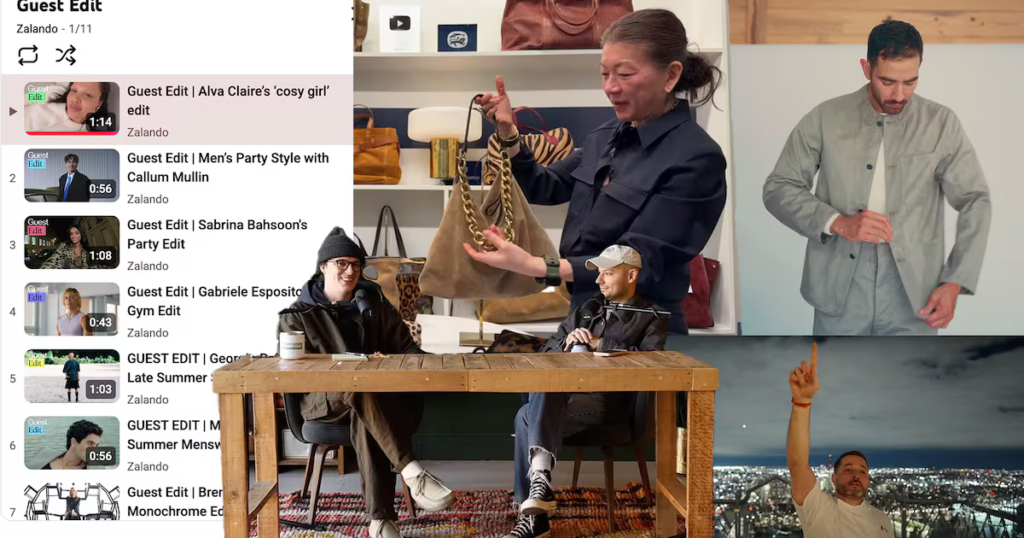
In 2020, Timothy Grindle, the co-founder and chief executive of the nine-year-old Boulder-based indie menswear boutique Canoe Club, uploaded a video to YouTube of himself and his chief operating officer answering customers’ frequently asked questions. They thought of it as an interesting experiment, but the response was so enthusiastic that they kept going. Today, the retailer posts as many as 11 videos a month, ranging from outfit competitions, collection breakdowns and a video podcast called “Customer Service,” all featuring members of its team. “At first it was nothing specific other than people liked it. There was a community building around it,” Grindle said. “Then we just started to see, ‘Hey, if we post a video where we do a talk through of everything that got delivered from Lemaire, we start seeing some Lemaire sales.” With 2 billion daily active users, YouTube is the the biggest streamer in the world. Netflix, the second largest, has 325 million paid subscribers. An estimated 35 billion hours of shopping-related content is posted each year, according to Julia Hamilton Trost, head of creator partnerships at YouTube Shopping. (BoF Team) But while fashion-oriented content creators are prolific on YouTube with their hauls, try-ons and brand analysis videos, and glossies like Vogue and GQ have launched popular interview series on the platform, many fashion brands have been reluctant to bake original YouTube content into their marketing strategy. Mostly, they use their channels to post runway shows or dump video campaigns they’ve already shared on Instagram and TikTok. That’s partly because of a perceived pressure for high-production value — many people watch YouTube on 4K television screens. But brands that actively invest in making longer-form videos on YouTube view it as a brand-awareness, world-building exercise that can turn into a competitive advantage in a saturated attention economy. “There’s a million handbag companies out there,” said Matthew Grenby, co-founder of leather goods maker Parker Thatch, which hosts weekly live Q&A sessions on its YouTube page. “A unique way for us to differentiate, beyond the product, is developing that personal relationship through these platforms with our customers.” YouTube is where creators go to foster in-depth relationships with an audience that prefers longer-form videos and wants to spend more time learning about a topic. To tap it as a brand-building platform, companies are producing consistent, budget-friendly content tailored to their ethos and target audiences. There aren’t usually massive sales bumps in the short term, but the level of engagement brands can get on YouTube through comments and shares can help build a new legion of passionate customers who will eventually purchase, and want to stay connected with the brand for years once they do. “The more bespoke the content is, the better,” said Rian Phin, a content creator who publishes brand and trend analysis-driven videos to her 111,000 subscribers on YouTube. “I would save my money to get something from a brand that’s going to do fun, creative forms of storytelling.” Why YouTube Makes Sense YouTube is somewhat of an ideal entertainment hybrid, with the audience size of a traditional television network and the targeting capabilities synonymous with social media platforms. That reach was especially enticing for German e-tailer Zalando, which has been uploading videos on YouTube since 2014. YouTube’s “lean back consumption,” where people go to hang out for long stretches of time, make it a perfect platform for Zalando to experiment with a variety of awareness-driven content, including its seasonal brand campaigns and interview series such as “The Perfect X,” where a rotating host talks to industry insiders like former Vogue editor Gabriella Karefa-Johnson and makeup artist Emily Wood, said Ivan Ponce, the e-tailer’s director of go-to-market marketing and media. The longer-form content also allows for more detailed videos. Canoe Club’s uploads feature staffers talking through new arrivals and showing how to style indie cult labels like Kapital and Orslow. Grindle said it’s a way to “advocate for the brands we carry” more meaningfully than “a brand bio at the bottom of the [product] page.” More accessible options for consumer-grade cameras and editing software has also helped bring down the cost of post-production, said Nick West, founder and chief executive of activewear upstart Bandit Running. The brand has produced documentary-style videos following athletes along their fitness journeys or chefs training for marathons for under $5,000 a pop, West said. Plus, the costs are worth attracting the type of shopper that watches this sort of content, he added. “The customer who watches for eight minutes, ends up being much more emotionally engaged, and a higher lifetime value customer than somebody who … watches a reel for six seconds,” West said. Posting videos on YouTube also gives brands a broader catalogue to use for paid ads across platforms. Last year, Parker Thatch started clipping snippets from its weekly Q&A sessions, where co-founder and designer Irene Chen talks through the creation and construction of new products, for ads across Google, Grenby said. He attributed that strategy to the brand more than quintupling its YouTube subscriber count to 117,000 in 2025. “Since YouTube is part of the Google ecosystem and plays nicely with all of our advertising efforts, that just makes it that much more compelling a platform for us to put time and effort into,” Grenby said. How to Create the Best Content on YouTube To stand out on YouTube, where over 500 hours of footage is uploaded every minute, brands should produce content that illustrates the world they’re building. For Bandit Running, YouTube is a place to tell “the most emotionally engaging stories in the sport of running” that it can, West said. The activewear startup does so through its series that documents the journeys of runners who are part of the company’s “Unsponsored Project,” where the brand financially supports athletes across sports who are training and competing in qualifier events in hopes of making the Olympic team. The goal should be to “make really good content that shows a brand’s uniqueness, but also feels organic and not overly produced,”

Uncategorized

Bad Bunny, Great Marketing for Natural Diamonds

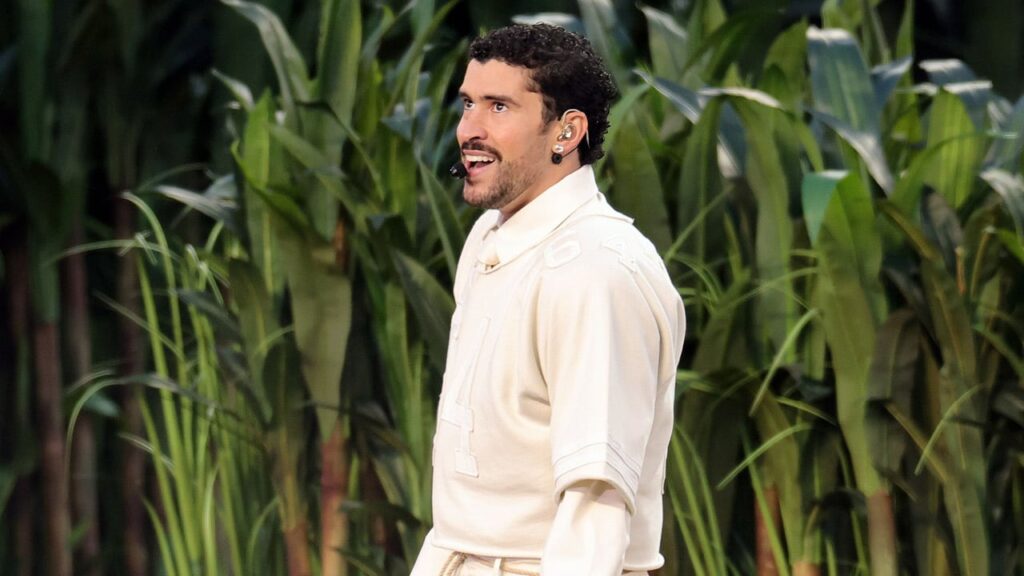
On Sunday, singer and rapper Bad Bunny stole the show with his halftime performance at Super Bowl LX, and while much of the resulting watercooler talk was about his loud and proud representation of Puerto Rican culture and symbolism, a more subtle nod was taking place — to natural diamonds. Wearing a marquise-cut stud earring featuring a honey-colored natural De Beers Desert Diamond, designed by Marvin Douglas, Bad Bunny’s football-shaped jewel was coordinated through A Diamond Is Forever, a natural-diamond marketing campaign the miner developed. The entertainer reinforced the theme when he picked up a natural-diamond engagement ring from a stall and handed it to a man who then proposed with it. All this led to a traditional family wedding, which featured a close-up of a diamond ring, associating it with the idea of love and connection. The Super Bowl spot was a win for natural diamonds, but not a heavily planned-out one. Best of all, it didn’t cost De Beers a cent. “This happened organically as part of a close, evolving, and mutually supportive and respectful relationship with a very talented designer,” said Sally Morrison, natural-diamond lead for De Beers. “It was very intentional on both sides, but certainly not a manufactured campaign idea, and I think that you can feel that in the outcome.” Rapaport CEO Dan Mano agreed, calling it “clever, positive storytelling” in a recent LinkedIn post. Evolution of a diamond campaign The miner works closely with jewelry designer Douglas, who is also Bad Bunny’s stylist. Last year, Douglas went on a trip with De Beers to southern Africa to visit the company’s operations, and was “incredibly inspired” by the idea of Desert Diamonds, and the feeling of connectedness to the earth they gave him, the miner explained. When Douglas was looking for a piece of jewelry to punctuate Bad Bunny’s overall look, he remembered the Desert Diamonds and came to De Beers to help source a marquise-shaped stone. “The whole show was layered with references to where we come from, our cultures, our beginnings, our connectedness, etc., and [Douglas] felt that a single diamond, in a shape that was reminiscent of a football, was highly symbolic, elegant, and a simple reflection of the meaning of the day,” Morrison said. Image: The Desert Diamond “football” earring designed by Marvin Douglas. (A Diamond Is Forever) Stepping back to get ahead The move is a new avenue for the industry: gently and not-so-prominently presenting natural diamonds, not as the star of the show, but definitely getting them noticed. In this way, natural diamonds aren’t being pushed, so much as just there. Their importance doesn’t lie in how obvious they are, but rather in the fact that they are a “natural” part of everyday life. It is also a shift that’s been sorely needed. As recently as late 2024, De Beers and Signet Jewelers were still using the same old marketing that focused on love, and the idea that real relationships need real diamonds. Last year, some tried a different method — bashing lab-grown diamonds in an attempt to uplift natural by comparison — a play that did not go over well with many in the industry, nor with the general public. The consensus was that these ads had a definite ring of desperation to them. Taking it under advisement Though this new method might seem like a roundabout way of introducing product placement, it actually goes well beyond that. Yes, the item — in this case natural diamonds — are a by-product of the main event, but they still get noticed. There’s also a nuanced subtext: connection. Last year, retail and luxury experts weighed in on what they felt needed to change in natural-diamond marketing to reignite passion. Dave Marcotte, senior vice president of the Americas for retail advisory group Kantar Consulting, felt current ads were “talking about love,” but “missing the connection…with the people they are trying to sell to.” Meanwhile, Laryssa Wirstiuk, founder of Joy Joya, a digital-marketing agency that works with luxury-jewelry brands, believed the trade needed to forgo the traditional and relate to younger consumers in a more targeted way. “I think in marketing, if you are just looking to try and outpace the other guy, it’s a constant race to the bottom, because you’re not actually doing anything positive to differentiate yourself in a fun, interesting and unique way,” she said. With this Super Bowl maneuver, the industry did both. It moved away from the traditional, creating a connection with Latino culture, love and marriage, and everyday life. It also presented diamonds as hip, fun, symbolic, attainable and luxurious all at the same time. In one 13-minute performance, natural diamonds became cool, fresh, interesting and unique. It also didn’t hurt to associate them with pride, independence, and one of the most popular musical artists in the world. And De Beers has more of these types of projects in the works, including a collaboration with Doja Cat and a number of other celebrities, with the goal of building “mutually collaborative relationships with all kinds of creative talent which deliver richer and more authentic outcomes, as opposed to ‘one and done’ transaction placements,” Morrison explained. “It takes time, but we believe it’s the optimal way to integrate our product into big, cultural moments,” she stated. More collaborations with prominent people that combine subtlety, connectivity, love, culture and high visibility? Yes, please. Image: Bad Bunny at the Super Bowl LX halftime show. (A Diamond Is Forever) Source link

Uncategorized

OpenAI details how ads will work in ChatGPT

In a conversation on the OpenAI podcast, host Andrew Maine spoke with OpenAI executive Assad Awan, who detailed how ads will roll out in ChatGPT, who will see them and how the company plans to protect user trust. Who will see ads: Ads will appear for Free and Go tier users Plus, Pro and Enterprise subscribers won’t see ads Enterprise workspaces will remain fully ad-free The guardrails: Awan emphasized that OpenAI is structuring ads around strict trust principles: Separation: Ads are visually and technically separate from model answers Privacy: Conversations aren’t shared with advertisers Sensitive topics: Health, politics and other sensitive chats won’t show ads Controls: Users can adjust or turn off personalization — or upgrade to remove ads According to Awan, the model itself doesn’t know when ads are present and can’t reference them unless a user explicitly asks about one. Zoom in. OpenAI internally prioritizes user trust over user value, advertiser value and revenue, Awan said — a framework meant to prevent ads from shaping how the model responds. For small businesses. Awan described a future where AI acts as an advertising agent, helping small businesses run campaigns by describing goals in plain language rather than managing complex dashboards. Why we care. ChatGPT ads could open a new, high-intent channel where businesses reach users during active conversations and decision-making moments. The platform’s focus on relevance, AI-driven matching and agent-style campaign tools could lower the barrier to entry for small and midsize advertisers while improving performance for larger brands. If OpenAI succeeds in building a trusted ad environment, it may reshape how advertisers think about discovery and customer engagement in AI-driven interfaces. What’s next. Early ad tests will be conservative, focusing on usefulness and relevance over volume as OpenAI refines formats and placement. The big picture. Through advertising, OpenAI is aiming to scale ChatGPT access while maintaining a trust-first design — a balance the company says is central to its long-term strategy. Dig deeper. Watch full interview with Assad Awan Search Engine Land is owned by Semrush. We remain committed to providing high-quality coverage of marketing topics. Unless otherwise noted, this page’s content was written by either an employee or a paid contractor of Semrush Inc. Anu Adegbola has been Paid Media Editor of Search Engine Land since 2024. She covers paid search, paid social, retail media, video and more. In 2008, Anu started her career delivering digital marketing campaigns (mostly but not exclusively Paid Search) by building strategies, maximising ROI, automating repetitive processes and bringing efficiency from every part of marketing departments through inspiring leadership both on agency, client and marketing tech side. Outside editing Search Engine Land article she is the founder of PPC networking event – PPC Live and host of weekly podcast PPC Live The Podcast. She is also an international speaker with some of the stages she has presented on being SMX (US, UK, Munich, Berlin), Friends of Search (Amsterdam, NL), brightonSEO, The Marketing Meetup, HeroConf (PPC Hero), SearchLove, BiddableWorld, SESLondon, PPC Chat Live, AdWorld Experience (Bologna, IT) and more. Source link

Uncategorized

Google outlines AI-powered, agent-driven future for shopping and ads in 2026

Google is redesigning shopping and advertising around AI-powered, agent-driven experiences, and said speed and certainty will converge for consumers and brands in 2026. In her third annual letter, Vidhya Srinivasan, Google’s VP and GM of Ads and Commerce, outlined how Search, YouTube, and its shopping infrastructure are being rebuilt for the agentic era — where AI doesn’t just surface information but actively assists, recommends, and completes transactions. Key trends. Google is redefining commercial intent across Search, YouTube, and AI interfaces. Ads are moving deeper into conversational experiences like AI Mode, creative production is becoming AI-native, and checkout is embedding directly into Search. Here are key takeaways from Srinivasan’s letter: Creators to commerce: YouTube remains a discovery hub, with creators serving as trusted tastemakers. AI helps match brands with the right creators, turning influence into measurable business impact. Search ads evolve: As conversational and visual queries rise, AI Mode reimagines ads as part of the discovery journey. New formats (e.g., sponsored retail listings, Direct Offers), aim to help users find products and services while giving brands meaningful ways to convert interest into sales. Agentic commerce arrives: Google is standardizing AI-driven shopping through the Universal Commerce Protocol (UCP), enabling consumers to browse, pay, and complete purchases seamlessly in AI Mode. Early rollouts include Etsy and Wayfair, with Shopify, Target, and Walmart to follow. AI-powered creative and performance: Gemini 3 powers ad tools that automate creative production and campaign optimization. Generative tools like Nano Banana and Veo 3 help advertisers create studio-quality assets in minutes, while AI Max expands reach and drives performance. Why we care. Adapting to AI-mediated commerce is increasingly necessary to stay competitive. Buying decisions are shifting — more often happening inside AI-driven search, creator content, and agent-powered checkout flows that could reshape traffic and conversion paths. These changes may create new ways to reach high-intent shoppers, but they also signal growing platform control over discovery, measurement, and transactions, potentially affecting competition, costs, and brand visibility. Google’s blog post. What to expect in digital advertising and commerce in 2026 Search Engine Land is owned by Semrush. We remain committed to providing high-quality coverage of marketing topics. Unless otherwise noted, this page’s content was written by either an employee or a paid contractor of Semrush Inc. Anu Adegbola has been Paid Media Editor of Search Engine Land since 2024. She covers paid search, paid social, retail media, video and more. In 2008, Anu started her career delivering digital marketing campaigns (mostly but not exclusively Paid Search) by building strategies, maximising ROI, automating repetitive processes and bringing efficiency from every part of marketing departments through inspiring leadership both on agency, client and marketing tech side. Outside editing Search Engine Land article she is the founder of PPC networking event – PPC Live and host of weekly podcast PPC Live The Podcast. She is also an international speaker with some of the stages she has presented on being SMX (US, UK, Munich, Berlin), Friends of Search (Amsterdam, NL), brightonSEO, The Marketing Meetup, HeroConf (PPC Hero), SearchLove, BiddableWorld, SESLondon, PPC Chat Live, AdWorld Experience (Bologna, IT) and more. Source link

Uncategorized

Company news: CenterState CEO hires Jeff Hart, Annie Taylor, Tatiana Wicker

CenterState CEO has hired three professionals to expand its administration, human capital, marketing and communications operations. Jeff Hart joins the organization as director of facilities, where he oversees operations, maintenance and safety across multiple sites in CenterState CEO’s portfolio. Hart works with teams at INSPYRE Innovation Hub, CNY ONRAMP and Electronics Park while managing vendor relationships and leading maintenance teams. His responsibilities include conducting regular site inspections, managing building service contracts, monitoring building performance and establishing building management systems, emergency protocols and operational best practices. The Central New York native previously served as facilities manager at Spectrum. >> Send us your company’s news about People in Motion Annie Taylor assumes the role of director of multichannel strategy and content production. She leads the design and strategic development of multichannel content for the organization, including INSPYRE’s social media platforms, digital content and marketing efforts. Taylor focuses on supporting the strategic communication needs of CenterState CEO’s Inclusive Growth portfolio. Taylor previously worked as an independent contractor for CenterState CEO, supporting the brand launch of INSPYRE Innovation Hub and executing social media content and client publications. She also serves as owner and creative director of Annie Taylor Design and holds a bachelor’s degree in graphic design from SUNY Buffalo State University. Tatiana Wicker has been hired as event and sponsorship coordinator. She develops sponsorship and advertising packages to support the organization’s budget and revenue goals while leading sales of advertising for annual publications, digital communications and the CenterState CEO podcast. Wicker also supports event planning and execution, including event production, registration, coordinating Signature Access events, and moderating Speed Networking events and training programs. She recently graduated from SUNY Brockport with a degree in communications and media production. *** If you’d like to submit an item about People in Motion at your organization, send a press release including photo, to business@syracuse.com with Company News in the subject field. We publish news about people with ties to Onondaga, Cayuga, Madison and Oswego counties. See all recent Company News items. Source link

Uncategorized

AI’s Biggest Risk Is the Story We’re Not Being Told

In one of the opening shots of Un Chien Andalou, a 1929 French film co-written by Salvador Dalí, often cited as one of the first surrealist films, a young woman stares directly at the camera as a razor blade slices across her eye.  OK, she didn’t actually have her eye slit open, thanks to movie magic and all. But the movie uses surrealism as a powerful new way of seeing and interpreting the world. It’s supposed to shock us out of passive viewing and spectatorship, and take us beyond traditional perception.  Last Thursday, as I sat in a lecture hall at the Salvador Dalí Museum in St. Petersburg, Florida, listening to a talk about emerging technology and innovation in 2026, I hoped for a discussion about similarly revolutionary modern innovations.  But far too often, when we talk about AI, we don’t confront this potentially revolutionary technology with our eyes wide open. Instead, whether it’s in small lectures, social media posts or Super Bowl commercials, we get a one-sided marketing pitch that masks the real risks and concerns surrounding AI. Based on the audience’s questions during the Q&A, this was likely the first real introduction to generative and physical AI for many of them. The group absorbed everything uncritically, nodding along and blooming with excitement as the lecture painted a picture of a future transformed entirely for the better.  In one particularly grating instance, we were shown a video of LG’s laundry-folding robot that debuted last month at the CES 2026 trade show in Las Vegas. Having seen the robot for myself, I knew how slow it was at folding just one uniform-sized T-shirt. A robot that can actually assist with home chores is years away.  “Who wants this robot?” the speaker shouted, and hands raised all over the room.  Was there any mention of the technology’s limitations, like the fact that it needs human help to reach into the hamper? Was there any mention of the prohibitive cost? Of course not. The crowd left that room with their understanding of AI shaped by someone who had carefully avoided mentioning any of the technology’s downsides.  This is a problem.  The people with platforms — whether they’re tech experts, museum lecturers or influencers with millions of followers — have a responsibility to tell the truth about AI. Not just the exciting parts. Not just the parts that make for good marketing. All of it.  When public figures highlight AI’s capabilities, they gloss over its risks: the devastating environmental impact, the proclivity for chatbots to hallucinate and make things up, the concerning way AI use affects memory skills and the rising incidents of AI-induced psychosis and suicide.  These dangers are conveniently left out of the conversation; conversations that shape public perception in a way that serves a select few’s interests, not the world’s.  We’ve seen this dangerous pattern before.  Since a 2018 US Supreme Court decision allowed states to legalize sports betting, celebrities and influencers have lined up to promote betting apps, pocketing massive checks while their followers face rising rates of gambling addiction and financial ruin.  The 2021 crypto boom also brought a parade of celebrities hawking digital coins, many of which later crashed, leaving regular people holding worthless assets. Kim Kardashian settled with the SEC for $1.26 million in penalties for promoting a crypto token without disclosing that she was paid to do so. Matt Damon told us “fortune favors the brave” in a February 2022 Crypto.com Super Bowl ad that aged terribly in the wake of that year’s crypto crash.  We’re watching the same story unfold with AI. We’re seeing household-name actors jump into Super Bowl commercials championing AI companies for 100 million people. Influencers are taking money from AI companies to promote tools they probably don’t even use and likely don’t even understand, to audiences who have grown to trust them.  The difference is that AI’s risks go beyond financial loss. We’re talking about job displacement, the erosion of creative industries, the spread of misinformation at scale, deepfakes that can destroy reputations and, as mentioned earlier, the environmental cost of running these massive models.  This is why I appreciate artists like Guillermo del Toro who speak realistically about AI. When models that referenced his distinctive visual style went viral, he didn’t mince words about generative AI trained on artists’ work without their permission, compensation or respect for copyright laws. He called it theft.  Other artists and public figures have been similarly direct about the threat AI poses to their livelihoods and craft. Meanwhile, tech executives and developers dismiss these concerns as the latest wave of Luddism.  While I generally believe that famous people are not role models to follow or trust, many people do. They assume that if someone with credentials or celebrity is enthusiastically promoting something, then it must be safe, beneficial and inevitable. That public trust comes with responsibility.  If you’re going to insist on talking about AI in public, taking $600,000 to promote Microsoft Copilot to millions on social media or, if you’re the NFL, partnering with an AI company in a commercial airing during the biggest sporting event in America, you have an obligation to present the full picture — especially to audiences who are just learning about it.  Speak about the limitations. Talk about the jobs that are being eliminated. Mention the artists whose work is being scraped without consent to train these models. Acknowledge the staggering energy consumption. Explain how easy it is to generate convincing misinformation. Disclose when you’re paid by an AI company to say what you’re saying.  This doesn’t mean you can’t discuss the possibilities and benefits of AI. It has real potential to accelerate drug discovery, improve disease outcomes and solve complex problems. But framing it as pure progress and innovation — as an unalloyed good — is ignorant or deceptive.  Like the surrealist work that emerged after World War I, AI is revolutionary, provocative and disruptive. They both challenge the ways we see the world.  But surrealism was intentional and deeply human, rooted in our

Scroll to Top
0

Subtotal