
Uncategorized

Uncategorized

Agentic AI in healthcare: How Life Sciences marketing could achieve $450B in value by 2028

Agentic AI in healthcare is graduating from answering prompts to autonomously executing complex marketing tasks – and life sciences companies are betting their commercial strategies on it. According to a recent report cited by Capgemini Invent, AI agents could generate up to $450 billion in economic value through revenue uplift and cost savings globally by 2028, with 69% of executives planning to deploy agents in marketing processes by year’s end. The stakes are particularly high in pharmaceutical marketing, where sales representatives have increasingly limited face-time with healthcare professionals (HCPs) – a trend accelerated by Covid-19. The challenge isn’t just access; it’s making those rare interactions count with intelligence that’s currently trapped in data silos. The fragmented intelligence problem Briggs Davidson, senior director of digital, data & marketing strategy for life Sciences at Capgemini Invent, outlines a scenario that will sound familiar to anyone in pharma marketing: An HCP attends a conference where a competitor showcases promising drug results, publishes research, and shifts their prescriptions to a rival product – in a single quarter. “In most companies, legacy IT infrastructure and data silos keep this information in disparate systems in CRM, events databases and claims data,” Davidson writes. “Chances are, none of that information was accessible to sales reps before they met with the HCP.” The solution, according to Davidson, isn’t to connect these systems, it’s deploying agentic AI in healthcare marketing to autonomously query, synthesising and acting on unified data. Unlike conversational AI that responds to queries, agentic systems can independently execute multi-step tasks. Instead of a data engineer building a new pipeline, an AI agent could autonomously query the CRM and claims database to answer business questions like: “Identify oncologists in the Northwest who have a 20% lower prescription volume but attended our last medical congress.” From orchestration to autonomous execution Davidson frames the change as moving from an “omnichannel view” – coordinating experiences in channels – to true orchestration powered by agentic AI. In practice, this means a sales representative could have an agent assist with call and visit planning by asking: “What messages has my HCP responded to most recently?” or “Can you create a detailed intelligence brief on my HCP?” The agentic system would compile: Their most recent conversation with the HCP, The HCP’s prescribing behaviour, Thought-leaders the HCP follows, Relevant content to share, The HCP’s preferred outreach channels (in-person visits, emails, webinars). More significantly, the AI agent would then create a custom call plan for each HCP based on their unified profile and recommend follow-up steps based on engagement outcomes. “Agentic AI systems are about driving action, graduating from ‘answer my prompt,’ to ‘autonomously execute my task,’” Davidson explains. “That means evolving the sales representative mindset from asking questions to coordinating small teams of specialised agents that work together: one plans, another retrieves and checks content, a third schedules and measures, and a fourth enforces compliance guardrails – all under human oversight.” The AI-ready data prerequisite The operational promise hinges on what Davidson calls “AI-ready data” – standardised, accessible, complete, and trustworthy information that enables three abilities: Faster decision making: Predictive analytics that provide near real-time alerts on what’s about to happen, letting sales representatives act proactively. Personalisation at scale: Delivering customised experiences to thousands of HCPs simultaneously with small human teams enabled by specialised agent networks. True marketing ROI: Moving beyond monthly historical reports to understanding which marketing activities are actively driving prescriptions. Davidson emphasises that successful deployment starts with marketing and IT alignment on initial use cases, with stakeholders identifying KPIs that demonstrate tangible outcomes – like specific percentage increases in HCP engagement or sales representative productivity. Critical implementation questions The article frames agentic AI in healthcare as “not simply another technology-led ability; it’s a new operating layer for commercial teams.” But it acknowledges that “agentic AI’s full value only materialises with AI-ready data, trustworthy deployment and workflow redesign.” What remains unaddressed is the regulatory and compliance complexity of autonomous systems querying claims databases containing prescriber behaviour, particularly under HIPAA’s minimum necessary standard. The piece also doesn’t detail actual client implementations or metrics beyond the aspirational $450B economic value projection. For global organisations, Davidson says use cases “can and should be tailored to fit each market’s maturity for maximum ROI,” suggesting that deployment will vary in regulatory environments. The fundamental value proposition, according to Davidson, centres on bidirectional benefit: “The HCP receives directly relevant content, and the marketing teams can drive increased HCP engagement and conversion.” Whether that vision of autonomous marketing agents coordinating in CRM, events, and claims systems becomes standard practice by 2028 – or remains constrained by data governance realities – will likely determine if life sciences achieves anything close to that $450 billion opportunity. See also: China’s hyperscalers bet billions on agentic AI as commerce becomes the new battleground Want to learn more about AI and big data from industry leaders? Check out AI & Big Data Expo taking place in Amsterdam, California, and London. The comprehensive event is part of TechEx and is co-located with other leading technology events including the Cyber Security & Cloud Expo. Click here for more information. AI News is powered by TechForge Media. Explore other upcoming enterprise technology events and webinars here. Source link

Uncategorized

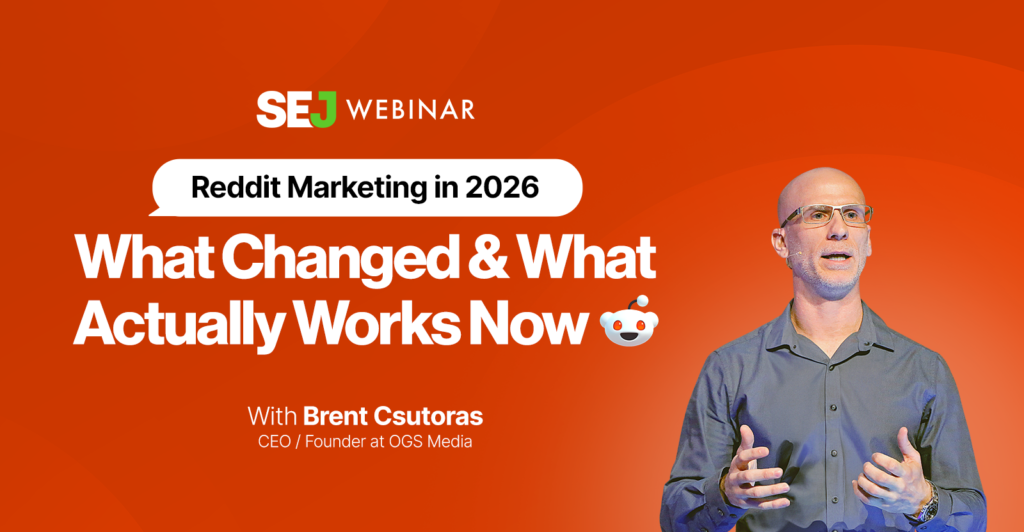
Make 2026 The Year Your Business Thrives On Reddit [Webinar]

Yes, yes we all know customer behavior is changing and Reddit conversations showing up in AI search is a big part of that shift. What are you doing about it? If your Reddit marketing strategy hasn’t evolved since 2024 (or you don’t have one to start with), you’re not just behind. You might be actively harming your brand. We’re past the point of debating whether brands should be on Reddit. That part’s settled. This session is about how to navigate Reddit the right way. And, we’re going to show you exactly how to do it! I am super excited to bring back our Reddit expert, and SEJ owner/advisor, Brent Csutoras. Bring your notepad and start flexing those fingers, because you’ll have plenty of inspiration and action items after this one! Learn From Someone Who’s Navigated It All On February 24, join Brent for a live presentation showcasing how brands can have success. And, we’ll be doing live Q&A at the end, so bring your specific burning questions. With nearly 20 years on Reddit and experience building authentic presence for brands like Purple, Asurion, and TikTok, Brent understands what communities respect and what they reject. These are frameworks built from real campaigns, real mistakes, and real results on a platform where communities can smell fakeness from three subreddits away. What You’ll Learn How karma and authority actually work nowThe mechanics changed, and what used to build credibility can now destroy it. You’ll learn the new rules for establishing authority without triggering Reddit’s detection systems. Brand representation without the astroturfing accusationsReddit communities have gotten better at spotting fake engagement, and they’re not shy about calling it out publicly. Discover how brands are building genuine presence, when to be transparent about who you are, and how to navigate the line between wanting to be your typical salesy brand versus a thought leader they want to hear from and engage with. Why your brand needs its own subreddit and how to run it rightOwned subreddits have become critical infrastructure for Reddit success. Learn what makes brand subreddits work, how to build engagement that communities want to participate in, and the common mistakes that kill momentum in that first 90 days. Who Should Attend This webinar is essential for marketing directors, social media managers, and brand strategists who recognize Reddit’s importance and are looking for the playbook to do it successfully. If you’re at a B2B SaaS company or consumer brand trying to prove Reddit’s value to leadership, this session will give you frameworks for measuring real impact on the customer journey and building authentic presence that communities respect. Walk Away With Updated Frameworks This isn’t a session about Reddit basics or generic social media strategy. This is up-to-date, specific guidance on what works right now. You’ll leave with actionable frameworks you can implement immediately, a clearer understanding of how to measure Reddit’s true influence on your business, and the confidence to build a presence that drives quality traffic. Register for the webinar and ask your questions live! Learn how to be a part of the community conversations and thrive on Reddit this year. I can’t wait to see you there! Source link

Uncategorized

How SEO leaders can explain agentic AI to ecommerce executives

Agentic AI is increasingly appearing in leadership conversations, often accompanied by big claims and unclear expectations. For SEO leaders working with ecommerce brands, this creates a familiar challenge. Executives hear about autonomous agents, automated purchasing, and AI-led decisions, and they want to know what this really means for growth, risk, and competitiveness. What they don’t need is more hype. They need clear explanations, grounded thinking, and practical guidance.  This is where SEO leaders can add real value, not by predicting the future, but by helping leadership understand what is changing, what isn’t, and how to respond without overreacting. Here’s how. Start by explaining what ‘agentic’ actually means A useful first step is to remove the mystery from the term itself. Agentic systems don’t replace customers, they act on behalf of customers. The intent, preferences, and constraints still come from a person. What changes is who does the work. Discovery, comparison, filtering, and sometimes execution are handled by software that can move faster and process more information than a human can. When speaking to executive teams, a simple framing works best: “We’re not losing customers, we’re adding a new decision-maker into the journey. That decision-maker is software acting as a proxy for the customer.”  Once this is clear, the conversation becomes calmer and more practical, and the focus moves away from fear and toward preparation. Your customers search everywhere. Make sure your brand shows up. The SEO toolkit you know, plus the AI visibility data you need. Start Free Trial Get started with Keep expectations realistic and avoid the hype Another important role for SEO leaders is to slow the conversation down. Agentic behavior will not arrive everywhere at the same time. Its impact will be uneven and gradual. Some categories will see change earlier because their products are standardized and data is already well structured. Others will move more slowly because trust, complexity, or regulation makes automation harder. This matters because leadership teams often fall into one of two traps: Panic, where plans are rewritten too quickly, budgets move too fast, and teams chase futures that may still be some distance away.  Dismissal, where nothing changes until performance clearly drops, and by then the response is rushed. SEO leaders can offer a steadier view. Agentic AI accelerates trends that already exist. Personalized discovery, fewer visible clicks, and more pressure on data quality are not new problems.  Agents simply make them more obvious. Seen this way, agentic AI becomes a reason to improve foundations, not a reason to chase novelty. Dig deeper: Are we ready for the agentic web? Change the conversation from rankings to eligibility One of the most helpful shifts in executive conversations is moving away from rankings as the main outcome of SEO. In an agent-led journey, the key question isn’t “do we rank well?” but “are we eligible to be chosen at all?” Eligibility depends on clarity, consistency, and trust. An agent needs to understand what you sell, who it is for, how much it costs, whether it is available, and how risky it is to choose you on behalf of a user. This is a strong way to connect SEO to commercial reality. Questions worth raising include whether product information is consistent across systems, whether pricing and availability are reliable, and whether policies reduce uncertainty or create it. Framed this way, SEO becomes less about chasing traffic and more about making the business easy to select. Explain why SEO no longer sits only in marketing Many executives still see SEO as a marketing channel, but agentic behavior challenges that view. Selection by an agent depends on factors that sit well beyond marketing. Data quality, technical reliability, stock accuracy, delivery performance, and payment confidence all play a role. SEO leaders should be clear about this. This isn’t about writing more content. It’s about making sure the business is understandable, reliable, and usable by machines. Positioned correctly, SEO becomes a connecting function that helps leadership see where gaps in systems or data could prevent the brand from being selected. This often resonates because it links SEO to risk and operational health, not just growth. Dig deeper: How to integrate SEO into your broader marketing strategy Be clear that discovery will change first For most ecommerce brands, the earliest impact of agentic systems will be at the top of the funnel. Discovery becomes more conversational and more personal. Users describe situations, needs, and constraints instead of typing short search phrases, and the agent then turns that context into actions. This reduces the value of simply owning category head terms. If an agent knows a user’s budget, preferences, delivery expectations, and past behavior, it doesn’t behave like a first-time visitor. It behaves like a well-informed repeat customer. This creates a reporting challenge. Some SEO work will no longer look like direct demand creation, even though it still influences outcomes. Leadership teams need to be prepared for this shift. Get the newsletter search marketers rely on. Reframe consideration as filtering, not persuasion The middle of the funnel also changes shape. Today, consideration often involves reading reviews, comparing options, and seeking reassurance. In an agent-led journey, consideration becomes a filtering process, where the agent removes options it believes the user would reject and keeps those that fit. This has clear implications. Generic content becomes less effective as a traffic driver because agents can generate summaries and comparisons instantly. Trust signals become structural, meaning claims need to be backed by consistent and verifiable information. In many cases, a brand may be chosen without the user being consciously aware of it. That can be positive for conversion, but risky for long-term brand strength if recognition isn’t built elsewhere. Dig deeper: How to align your SEO strategy with the stages of buyer intent Set honest expectations about measurement Executives care about measurement, and agentic AI makes this harder. As more discovery and consideration happen inside AI systems, fewer interactions leave clean attribution trails. Some impact will show up as direct traffic, and some will

Uncategorized

AMD has a new marketing chief, Salesforce’s former president and marketing boss, and he’s all in on data centers and AI

Ask any long-term PC tech enthusiast or hardware journalist what they think about AMD, and you’ll probably be met with endless praise for its products and engineering know-how. Prod them for the negative aspects, and they’ll probably grumble about its marketing decisions, but perhaps that’s all set to change, as there’s a new bod in charge, freshly poached from Salesforce. When I say ‘freshly poached’, I really do mean that, because Ariel Kielman was listed in Salesforce’s executive team as recently as yesterday. Not any more, though, because AMD has snapped him up as its senior vice president and chief marketing officer (CMO) with immediate effect. Kelman has a history of working with tech companies, having been the CMO at Amazon Web Services (AWS) and Oracle, though he’s most well-known for being at Salesforce. He’s not the only person to have left that company, as there has been a bit of a reshuffling of executives at the top. Related articles But why did AMD want to employ him? “Ariel is a proven marketing leader with deep experience building brands, driving marketing impact at scale and connecting innovation to customer value,” said Ruth Cotter, AMD’s chief administrative officer. “As AMD continues to expand our portfolio and deliver industry-leading high-performance and AI solutions across data center, embedded, client and gaming, Ariel’s leadership will be instrumental in sharpening our storytelling, advancing our marketing organization and accelerating our momentum.” (Image credit: Salesforce) In AMD’s press announcement about the new hire, Kelman is quoted as saying, “I’m thrilled to join AMD at such an exciting moment in the company’s journey. I’m looking forward to working with the team to elevate the AMD brand, deepen engagement with customers and partners and capture the massive AI data center opportunity enabled by AMD’s uniquely differentiated products. That combination is what energizes me most.” Ah, of course. AI. Salesforce went all in on it right from the start of this decade’s exponential artificial intelligence growth, launching its LLM-powered Agentforce back in 2024, so it’s only natural that AMD is expecting Kelman to help boost Team Red’s AI ambitions, rather than anything gaming or consumer-related. Keep up to date with the most important stories and the best deals, as picked by the PC Gamer team. Which is a shame, because AI hardware is in such hot demand right now, AMD could release a three-legged tortoise with an embedded NPU, and someone will still buy it. What the company really needs is someone to handle things like the debacle of the RDNA 4 launch, though if I’m going to wish for miracles, I might as well just expect Kelman to magic affordable graphics cards out of thin air. But hey, you never know: Kelman could be a secret PC gamer, and he might just start asking his new colleagues when RDNA 2/3 support will be officially added to FSR 4, especially now that modders have been getting it to work for some time now. (Image credit: Future) He might have a sudden burst of altruism and pester AMD’s chiefs as to why there’s no truly budget RDNA 4 card, or where’s the Radeon equivalent of the RTX 5090, when Nvidia manages to sell its monster card without issue. Alas, pure gaming is just chump change for tech companies these days. All the mega profit margins are to be found in the world of data centers, thanks to the seemingly endless amount of money being thrown at AI. And given Kelman’s background and obvious remit, it’s clear that AMD has eyes on only one prize at the moment. When that will change is anyone’s guess. Best graphics card 2026 All our current recommendations Source link

Uncategorized

Should I Optimize My Content Differently For Each Platform?

This week’s Ask an SEO question is from an anonymous reader who asks: “Should I be optimizing content differently for LinkedIn, Reddit, and traditional search engines? I’m seeing these platforms rank highly in Google results, but I’m not sure how to create a cohesive multi-platform SEO approach.” Yes, you should absolutely be optimizing your content differently based on where you publish it, where you want to reach the audience, and the way they engage. This includes what you put out, what goes on your website, and what exists in your metadata. Each platform has a different user experience, and the people there go for different reasons, so your job with your content is to meet their needs where they are. Metadata For SEO purposes, you’re limited to a certain amount of pixels for meta titles and descriptions in a search result, whereas on social media platforms, you’re limited to a different number of characters. This means your titles and descriptions need to be modified to fit the pixel or character lengths defined by the platforms, including Open Graph, rich pins, etc.  The people on the platform may also be at different stages of their journey and be different audience demographics. If the audience on one platform that has its own metadata elements, and it is younger or skews towards one gender, cater the text and imagery in your metadata towards them. It’s worth seeing if that resonates better, but only if that is the majority from that platform. For search engines, it can be anyone and any demographic, so make it a strong sales pitch that is all-inclusive. Use your customer service and review data to find out what matters to them and use it in your messaging. The same goes for the images you use. What fits on Pinterest won’t look good on LinkedIn, and an image for Google Discover may not work great on Instagram. Pinterest can display a vertical infographic and make it look great, but it will be illegible on platforms that have squares and landscape-oriented images. Resize, change the wording, and ensure the focal point on the image matches the platform it’ll be used on via your metadata. Search engines and social algorithms look for different things as well. A search engine may allow some clickbait and salesy types of titles and metadata, but social media algorithms may penalize sites that do this. And each platform will be using and looking for different signals. This is why you want to speak to the audiences on the platforms and focus on what the platform rewards, not just a search engine. Your customers on TikTok may be younger and use different wording than your customers on Facebook, but both will need a balance of the wording on your webpage. This is where using unique metadata by platform and purpose matters. Content On Your Own Pages Not every page on your website has to be for SEO, AIO, or GEO, and neither does the user experience. If the page is for an email blast or remarketing where you have strong calls to action, less text, and more conversion, you can noindex it or use a canonical link to the detailed new customer experience page. The same goes for SEO vs. social media visitors. Someone from social media may need more of an education when buying a product because they didn’t set out that day to buy it; they were on social media to have fun. Someone looking for a product, product + review, or a comparison has a background on the product and wants a solution, so they went to a search engine to find one. This is where an educational vs. a conversion option can happen, and both can exist without competing, even though they’re optimized for the same keyword phrase. The schema, the way wording is used, and elements on the page like an “add to cart” button above the fold help search engines to know the page is for conversions, while an H1, H2, and text with internal links to product and content pages mean it’s for educational purposes. Now apply this to the goal of what you want to the person to do on the page to the page, and keep in mind where they are coming from before they reach it. You may want a more visual approach with video demonstrations or reviews, and options to shop and learn more for some experiences, vs. giving them the product and a buy now button. Both are optimized for the same keywords, but both are there for different visitors. This is where you deduplicate them using your SEO skills. The keywords and phrases will be similar in your title tag, H1 tag, and compete directly against the product or collection page, but the page is how people from Snapchat and Reddit engage vs. someone from an email blast that knows how your brand behaves. So, set the canonical link to the main product page and/or add a meta robots noindex,follow. When you’re pushing your content out, share the version of the page to the platform it is designed for. Your site structure and robots.txt guide the search engines and AI to the pages meant for them, helping to eliminate the cannibalization. It is the same content, the same purpose, and the same goal, just a unique format for the platform you want traffic from. I wouldn’t recommend this for everything because it is a ton of work, but for important pages, products, and services, it can make a difference to provide a better UX based on what the person and platform prefer. What You Post To The Platform Last is the content you post to the platform. Some allow hashtags; others prefer a lot of words, and platforms like X or Bluesky restrict the number of words you can use unless you pay. The audiences on these platforms pay attention to and use different words, and the algorithms may reward or penalize content differently.

Uncategorized

Ralph Lauren Continues Its Winter Marketing Blitz at Home

It’s been a busy start to 2026 for Ralph Lauren. Already this year, the brand has staged a menswear show at Milan Fashion Week in January, hosted a group of top creators in Aspen and dressed Team USA’s athletes for the opening ceremonies at the Winter Olympics in Milan. On Tuesday evening, Ralph Lauren made time to return home to New York City to stage its Autumn/Winter 2026 runway show, held at the Jack Shainman art gallery in Tribeca, the same location it staged its Autumn/Winter 2025 show last year. Though not officially on the New York Fashion Week calendar, for a number of recent seasons, Ralph Lauren has shown the night before the schedule begins, serving, alongside Marc Jacobs’ pre-schedule showing, as an unofficial kick-off. Though this wasn’t one of the brand’s splashier shows location-wise — September 2024’s was staged in the Hamptons, complete with a one-night-only reconstruction of the Polo Bar, while in February of that year, the Brooklyn Navy Yard was transformed into a recreation of Lauren’s Colorado ranch — it was still meant to transport attendees. From the clothes that walked the runway to the decor in the room, the show evoked a glamorous hunting weekend — the show notes said this season’s woman is defined by “a passion for adventure.” Along the walls was a backdrop showcasing a pastoral landscape while vibrant multi-coloured oriental rugs covered the floors. Models wore a palette of dark, earthy tones mixed with classic plaid and jacquard prints. There were plenty of pieces that would be at home at a country estate in the Cotswolds, either today or 100 years ago — think tweed blazers, caped trench coats, over-the-knee riding boots. But mixed in were more modern touches — sequined mini dresses, velvet gowns and cheetah-print coats — as well as those that blended the two, like cravat-style collars secured with a brooch, a silk skirt printed with hunting scenes or a vest made to look like chainmail. Beyond the brand’s world-building prowess, the show also had a hefty dose of star power: Among those sitting in the front row were Lana Del Rey, Anne Hathaway, Morgan Spector and Ariana DeBose, as well as K-pop stars like Krystal Jung and Kim Do-yeon. Even amid its busy winter, giving womenswear its own standalone moment was a priority for the brand, said David Lauren, Ralph Lauren’s chief branding and innovation officer (and son of the designer himself). The category has been named as a major source of growth potential for the brand. “There’s a very clear vision for this brand and for this show,” said Lauren. “When we did the men’s show, the clothes were very eclectic and … can work across Polo or Purple Label. This show, we wanted to be very focused and didn’t want to distract from that.” In the last few years, Ralph Lauren has done a stellar job in harnessing its potential and channeling it into sales growth. Much ink has been spilt on Ralph Lauren’s comeback, which has seen it reposition itself from an overexposed, often-discounted American brand into a premium label for an increasingly global audience. At its investor day last fall, chief executive Patrice Louvet introduced the latest phase of the plan, focused on continuing to elevate the brand, and targeting growth in underdeveloped categories and markets, including the womenswear on display Tuesday night. As the successes have compounded — Ralph Lauren earlier this month reported its 19th consecutive quarter of sales growth — so have the expectations. While its fourth-quarter results were objectively strong, with sales and profits topping forecasts, the company’s stock dropped after the results came out. Investors were displeased that the 7 percent sales increase fell short of last year’s even better 8 percent growth. Shares have since recovered. But that brief wobble reflects the enviable challenge Ralph Lauren faces right now: The company’s success has set a high standard, and anything less can feel like falling short. “It’s a question of, how long can they continue the strong momentum?” said Blake Anderson, senior analyst at Jefferies. “They’ve set the bar high, so investors want to see them continue to perform at this level.” The brand is confident more growth potential remains. Beyond womenswear, on last week’s earnings call, Louvet called out handbags and outerwear as other areas of focus. The latter, in particular, has been on display lately, both on the Olympians during the parade of nations last week as well as on the creators, including Meredith Hayden of Wishbone Kitchen and Devon Lee Carlson, both in Milan and Aspen. “There are many different stories, different brands and different aesthetics that all play in the world of Ralph,” said Lauren. “To go from the elegance of a collection show in New York to the top of the mountain with the Olympics is very exciting.” By and large, major marketing moments are how they’ll get there. The company upped marketing spend last quarter to 8 percent of sales from 7.1 percent the year before, and increased its marketing outlook to a range of 7.5 percent to 8 percent for the year. Louvet said they have “stronger confidence than ever in our marketing ROI.” “Our job is to just keep doing what we do and do it as well as we can,” said Lauren. Source link

Uncategorized

Google pushes AI Max tool with in-app ads

Google is now promoting its own AI features inside Google Ads — a rare move that inserts marketing directly into advertisers’ workflow. What’s happening. Users are seeing promotional messages for AI Max for Search campaigns when they open campaign settings panels. The notifications appear during routine account audits and updates. It essentially serves as an internal advertisement for Google’s own tooling. Why we care. The in-platform placement signals Google is pushing to accelerate AI adoption among advertisers, moving from optional rollouts to active promotion. While Google often introduces AI-driven features, promoting them directly within existing workflows marks a more aggressive adoption strategy. What to watch. Whether this promotional approach expands to other Google Ads features — and how advertisers respond to marketing within their management interface. First seen. Julie Bacchini, president and founder of Neptune Moon, spotted the notification and shared it on LinkedIn. She wrote: “Nothing like Google Ads essentially running an ad for AI Max in the settings area of a campaign.” Search Engine Land is owned by Semrush. We remain committed to providing high-quality coverage of marketing topics. Unless otherwise noted, this page’s content was written by either an employee or a paid contractor of Semrush Inc. Anu Adegbola has been Paid Media Editor of Search Engine Land since 2024. She covers paid search, paid social, retail media, video and more. In 2008, Anu started her career delivering digital marketing campaigns (mostly but not exclusively Paid Search) by building strategies, maximising ROI, automating repetitive processes and bringing efficiency from every part of marketing departments through inspiring leadership both on agency, client and marketing tech side. Outside editing Search Engine Land article she is the founder of PPC networking event – PPC Live and host of weekly podcast PPC Live The Podcast. She is also an international speaker with some of the stages she has presented on being SMX (US, UK, Munich, Berlin), Friends of Search (Amsterdam, NL), brightonSEO, The Marketing Meetup, HeroConf (PPC Hero), SearchLove, BiddableWorld, SESLondon, PPC Chat Live, AdWorld Experience (Bologna, IT) and more. Source link

Uncategorized

How AI Is Transforming Online Shopping and Creating Smarter Customer Experiences

Artificial Intelligence (AI) is rapidly changing the way businesses operate, and the eCommerce industry is one of the biggest beneficiaries of this transformation. From personalized product recommendations to automated customer support, AI is making online shopping faster, smarter, more affordable, and more customer-friendly than ever before. As consumers increasingly shift to digital shopping, brands like Barata Mart are using AI-driven strategies to improve product discovery, optimize pricing, and deliver better shopping experiences. This blog explores how AI is reshaping online retail, improving affordability, and helping customers make smarter purchasing decisions. The Growing Role of AI in eCommerce AI refers to machines and software systems that can analyze data, learn patterns, and make intelligent decisions. In eCommerce, AI helps businesses understand customer behavior, predict demand, and personalize shopping journeys. Today, AI powers many essential features in online shopping, including: Product recommendations Price optimization Chatbots and virtual assistants Inventory management Fraud detection Customer behavior analytics These technologies allow online marketplaces to deliver better value, reduce costs, and enhance customer satisfaction. Personalized Shopping Experiences Powered by AI One of the most noticeable benefits of AI in online shopping is personalization. AI analyzes customer browsing history, purchase behavior, and preferences to suggest products that match individual interests. For example, if a shopper frequently searches for budget-friendly home products, AI can recommend affordable household essentials that fit their needs. This makes shopping faster and more relevant while helping customers find better deals without wasting time. Personalization improves customer satisfaction because it: Reduces search time Highlights relevant deals Creates a tailored shopping experience Encourages smarter purchasing decisions AI Helps Keep Online Shopping Affordable Affordability is one of the biggest priorities for online shoppers today. AI plays a key role in keeping prices competitive while maintaining quality. Through data analysis, AI helps businesses: Monitor competitor pricing Predict product demand Optimize supply chains Reduce unnecessary operational costs Offer dynamic discounts and deals By lowering operational expenses and improving efficiency, platforms like Barata Mart can offer honest pricing and budget-friendly products without compromising on quality. This ensures that customers enjoy real value, not inflated prices. Smarter Product Discovery with AI Finding the right product online can sometimes feel overwhelming due to the massive number of available options. AI improves this experience by helping customers discover products more easily and accurately. AI-powered search systems can: Understand natural language searches Suggest relevant products instantly Highlight trending or high-value items Recommend best-selling and top-rated products This makes online shopping more efficient and helps customers make confident, well-informed purchases. AI-Driven Customer Support and Faster Service Customer service is another area where AI is making a major impact. Many eCommerce platforms now use AI chatbots and automated support tools to handle customer inquiries instantly. AI customer support can: Answer common questions in real time Track orders and delivery status Resolve basic issues instantly Provide 24/7 assistance This improves response time, reduces waiting periods, and ensures customers receive faster and more reliable support. How AI Benefits Sellers and Small Businesses AI doesn’t only benefit customers — it also helps sellers and small businesses grow faster and operate more efficiently. AI tools can help sellers: Identify trending products Forecast demand and manage inventory Optimize pricing for better profits Improve product listings with smart insights Analyze customer feedback and behavior For sellers on platforms like Barata Mart, AI can support better business decisions, higher sales potential, and improved customer engagement. AI and Fraud Prevention in Online Shopping Online safety is a major concern for both customers and businesses. AI enhances security by detecting unusual activities and preventing fraud before it causes harm. AI systems help by: Monitoring suspicious transactions Identifying fake accounts Protecting payment systems Reducing chargebacks and scams This creates a safer and more trustworthy shopping environment, increasing customer confidence in online marketplaces. AI Enhances Supply Chain and Delivery Efficiency Behind the scenes, AI improves logistics and supply chain operations by predicting demand and optimizing inventory levels. AI helps businesses: Avoid overstocking or product shortages Improve warehouse efficiency Speed up order processing Optimize delivery routes Reduce shipping delays As a result, customers benefit from faster deliveries, better stock availability, and smoother order fulfillment. Humanizing AI in Online Retail While AI relies on technology and data, its purpose in eCommerce is ultimately to improve the human experience. The best platforms use AI to complement human decision-making rather than replace it. When implemented responsibly, AI can: Make shopping more convenient Improve customer trust Offer fair and transparent pricing Create meaningful customer interactions Human-centered AI ensures technology serves people, making online shopping more enjoyable, ethical, and customer-focused. The Future of AI in eCommerce As technology continues to evolve, AI will become even more integrated into online shopping experiences. Future advancements may include: Voice-activated shopping Hyper-personalized recommendations Virtual product try-ons Predictive shopping suggestions Fully automated fulfillment systems These innovations will further enhance convenience, affordability, and customer satisfaction, shaping the next generation of digital retail. Why AI Matters for Platforms Like Barata Mart Barata Mart is built on a core belief: quality should be affordable for everyone. By leveraging AI-driven insights, the platform can: Maintain competitive and honest pricing Recommend value-focused products Improve customer shopping experiences Support sellers with smart business tools Deliver better value at lower costs AI allows Barata Mart to stay aligned with its mission of offering affordable quality without compromise. Final Thoughts AI is no longer a futuristic concept — it is already transforming how we shop online. From personalized recommendations and smarter pricing to improved customer support and secure transactions, AI is making eCommerce more efficient, affordable, and customer-centric. For shoppers, AI means better deals, faster service, and smarter choices. For sellers, it means higher growth potential and improved efficiency. And for platforms like Barata Mart, AI enables the delivery of honest pricing, better quality, and a truly modern shopping experience. As AI continues to evolve, it will shape the future of online shopping — making it simpler, smarter, and more accessible for everyone.

Uncategorized

Affordable Online Shopping: How to Save More Without Compromising Quality

n today’s digital world, affordable online shopping has become the smartest way to buy quality products while staying within budget. With rising living costs, customers are increasingly looking for platforms that offer low prices, genuine quality, and a reliable shopping experience. The good news is that affordable online shopping no longer means settling for low-quality products — it means making smarter, value-driven choices. Platforms like Barata Mart are redefining the meaning of budget shopping by offering honest pricing, wide product selections, and customer-focused services. This blog explores how affordable online shopping works, how to get the best deals, and why it’s the future of smart consumer buying. Why Affordable Online Shopping Is Growing Rapidly Affordable online shopping is becoming popular because it offers convenience, cost savings, and variety in one place. Unlike traditional retail stores, online platforms eliminate middlemen and reduce overhead costs, allowing businesses to pass the savings directly to customers. Consumers now prefer shopping online because it allows them to: Compare prices easily Access more product options Save time and money Find deals and discounts quickly According to global eCommerce trends, online shopping continues to grow due to increasing smartphone usage and digital payment adoption(FAQ). How to Get the Best Deals Through Affordable Online Shopping To make the most of affordable online shopping, it’s important to shop strategically. Here are some proven tips to maximize savings: 1. Compare Prices Before Buying Always compare prices across multiple sellers to ensure you get the best value for money. 2. Shop During Sales and Promotions Seasonal sales, festival discounts, and clearance events can help you secure premium products at lower prices. 3. Choose Trusted Marketplaces Shopping from reliable platforms like Barata Mart ensures authentic products, transparent pricing, and secure payments.https://baratamart.com/our-promise-of-honest-pricing-and-real-value/ 4. Buy in Bulk When Possible Wholesale and bulk purchases often offer lower per-unit costs, making them ideal for families and resellers. Why Affordable Online Shopping Doesn’t Mean Low Quality A common misconception is that affordable products lack durability or performance. However, modern eCommerce platforms work directly with manufacturers and suppliers to offer high-quality products at competitive prices. Affordable online shopping focuses on: Reducing unnecessary markups Improving supply chain efficiency Offering value-driven pricing Maintaining strict quality standards This ensures customers receive trusted products without paying premium brand markups. Barata Mart’s Role in Affordable Online Shopping Barata Mart is built on a powerful idea: quality should be affordable for everyone. Inspired by the Spanish word “Barata” (meaning cheap), the brand is committed to honest pricing without compromising on value. Barata Mart supports affordable online shopping by offering: Budget-friendly daily essentials Lifestyle and home products Electronics and accessories Fashion and personal care items Wholesale and bulk buying options By cutting unnecessary costs, Barata Mart ensures customers enjoy affordable online shopping with real value. Explore their shopping experience here:(Internal link: https://www.baratamart.com/shop) Benefits of Affordable Online Shopping for Small Businesses Affordable online shopping isn’t just beneficial for customers — it’s also a powerful opportunity for small businesses and resellers. Small retailers can: Purchase inventory at lower wholesale rates Reduce sourcing costs Increase profit margins Expand into online selling Affordable marketplaces help entrepreneurs start businesses with lower investment and higher earning potential. Learn more about how eCommerce empowers small businesses:(External source: https://www.shopify.com/blog/ecommerce-trends) Smart Tips for Safe and Affordable Online Shopping To make affordable online shopping safer and more rewarding, keep these tips in mind: Buy from verified sellers Read customer reviews before purchasing Avoid deals that seem unrealistically cheap Use secure payment methods Track your orders for timely delivery By following these steps, you can ensure safe, smart, and cost-effective shopping every time. The Future of Affordable Online Shopping As technology advances, affordable online shopping will become even more personalized and cost-efficient. AI-based recommendations, improved logistics, and direct-to-consumer supply chains will further reduce prices while improving product quality. Consumers will benefit from: Faster delivery Better deals More product transparency Increased trust in online platforms Affordable online shopping is no longer a trend — it’s the future of modern retail. Final Thoughts Affordable online shopping is the perfect solution for customers who want high quality without high prices. With smart buying habits and trusted platforms like Barata Mart, shoppers can enjoy real savings, reliable products, and a smooth online experience. If you’re looking to save money, shop smarter, and get more value, now is the best time to embrace affordable only   Contact Us

Uncategorized

Raw Materials to Ready Profits: How Baratamart Is Powering Cheap Online Shops for Smart Ecommerce Sellers

JOIN US Raw Materials to Ready Profits: How Baratamart Is Powering Cheap Online Shops for Smart Ecommerce Sellers In today’s fast-moving digital economy, starting an online business no longer requires huge investments or complex supply chains. What matters most is access to affordable raw materials, reliable equipment, and a trusted ecommerce platform. This is where Baratamart is transforming the game for new and growing sellers. Baratamart is not just an ecommerce marketplace—it is a complete business enabler that helps sellers turn raw materials into ready profits with ease. From Raw Materials to Profitable Products One of the biggest challenges ecommerce sellers face is sourcing quality raw materials at low cost. Baratamart bridges this gap by connecting sellers directly with verified suppliers. What You Can Source on Baratamart Industrial and manufacturing raw materials Packaging materials Tools and raw equipment Retail and wholesale products Daily-use business supplies By cutting out unnecessary middlemen, sellers can reduce costs and increase profit margins from day one. Powering Cheap Online Shops for Smart Sellers Starting an online shop should not be expensive. Baratamart empowers sellers to open a cost-effective digital store without technical complexity. Why Baratamart Is Ideal for Budget-Friendly Ecommerce Low entry barriers for sellers Competitive pricing on products Wholesale and bulk buying options Seller-friendly commission structure Easy product listing and order management This makes Baratamart the perfect platform for small businesses, startups, and first-time ecommerce sellers. Smart Ecommerce Tools for Faster Growth Baratamart provides smart ecommerce features that help sellers grow faster and sell smarter. Seller Benefits Centralized dashboard for orders and inventory Secure payments and smooth logistics support Marketing visibility within the marketplace Scalable growth from retail to wholesale With these tools, sellers can focus on sales and growth, while Baratamart handles the operational backbone. Why Choose Baratamart for Your Online Business? Choosing the right ecommerce partner can define your success. Baratamart stands out because it is built for sellers, not just shoppers. Key Advantages Trusted ecommerce brand Affordable raw materials and equipment Support for both B2B and B2C selling Ideal for cheap online shops with high returns One platform for sourcing, selling, and scaling Whether you are a reseller, manufacturer, or entrepreneur, Baratamart helps convert raw inputs into real income. Who Can Sell on Baratamart? Baratamart is open to: Small business owners Wholesalers and distributors Manufacturers Startup founders Local shop owners going digital If you want to turn products into profits online, Baratamart is your launchpad. Final Thoughts: Build Smarter, Sell Faster with Baratamart The future of ecommerce belongs to sellers who think smart, start lean, and scale digitally. From affordable raw materials to ready-to-sell products, Baratamart powers every step of your online business journey. If you are looking to create a cheap online shop with strong profit potential, Baratamart is the platform built for you. Raw Materials to Ready Profits—Start Your Ecommerce Success with Baratamart Today. CONTACT US

Scroll to Top
0

Subtotal